O guia definitivo sobre edição genética.
Menu
Início Aprender Notícias Perguntar ao Atlas
Explorar Tecnologias Doenças Tratamentos Ensaios Clínicos Empresas Cientistas Genes Investigação Instituições
Para além da medicina Agricultura Ética Investimento Mapa mundial
Aprender e ferramentas Comece aqui Glossário A–Z Comparar tecnologias Cronologia Listas e rankings Agentes de IA ★ Guardado API
Sobre Sobre nós Metodologia Fontes de dados Política editorial Contato Avisos legais

🧭 Vista Guiada
É novo em genética? Explicamos cada termo à medida que navega, em linguagem simples. As mesmas páginas, com a ajuda integrada.

⚡ Opinião de Especialista
Você já conhece a biologia. Apenas o conteúdo — limpo e compacto, sem explicações extras. Esta é a visualização padrão.

Idioma da interface
Modo claro

Technology · Related approach

Synthetic Biology

Designing genetic parts and circuits so that cells perform new functions — the engineering discipline that gene editing serves as a tool.

Phase III engineeringcircuitscells
Clinical research Being tested in people in registered clinical trials. Being in trials is not evidence that a treatment works or is safe.

Explicação simples

Gene editing changes what is written in a cell's instructions. Synthetic biology asks what you would write if you were designing from scratch: sensors that detect a condition, switches that respond, circuits that make a cell do something it never did before. CAR-T cancer therapy is the best-known example — immune cells given a new receptor so they recognise tumours they would otherwise ignore.

Aprofundar

Synthetic biology applies engineering principles — standardised parts, modular composition, design-build-test cycles — to biological systems. In medicine its most successful output is engineered cell therapy, notably CAR-T. Gene editing is one tool within it: editing is how synthetic constructs are installed and how unwanted native functions are removed, particularly in allogeneic products where the donor cells' own receptors must be disabled.

Where editing and synthetic biology meet

Allogeneic — 'off the shelf' — cell therapy is the clearest intersection. Making one donor's cells usable in many patients requires removing the T-cell receptor so the cells do not attack the recipient, and removing markers so the recipient does not immediately destroy them. That is several simultaneous edits in one cell, which is why multiplex editing capability is a competitive advantage in this field.

Where editing and synthetic biology meet
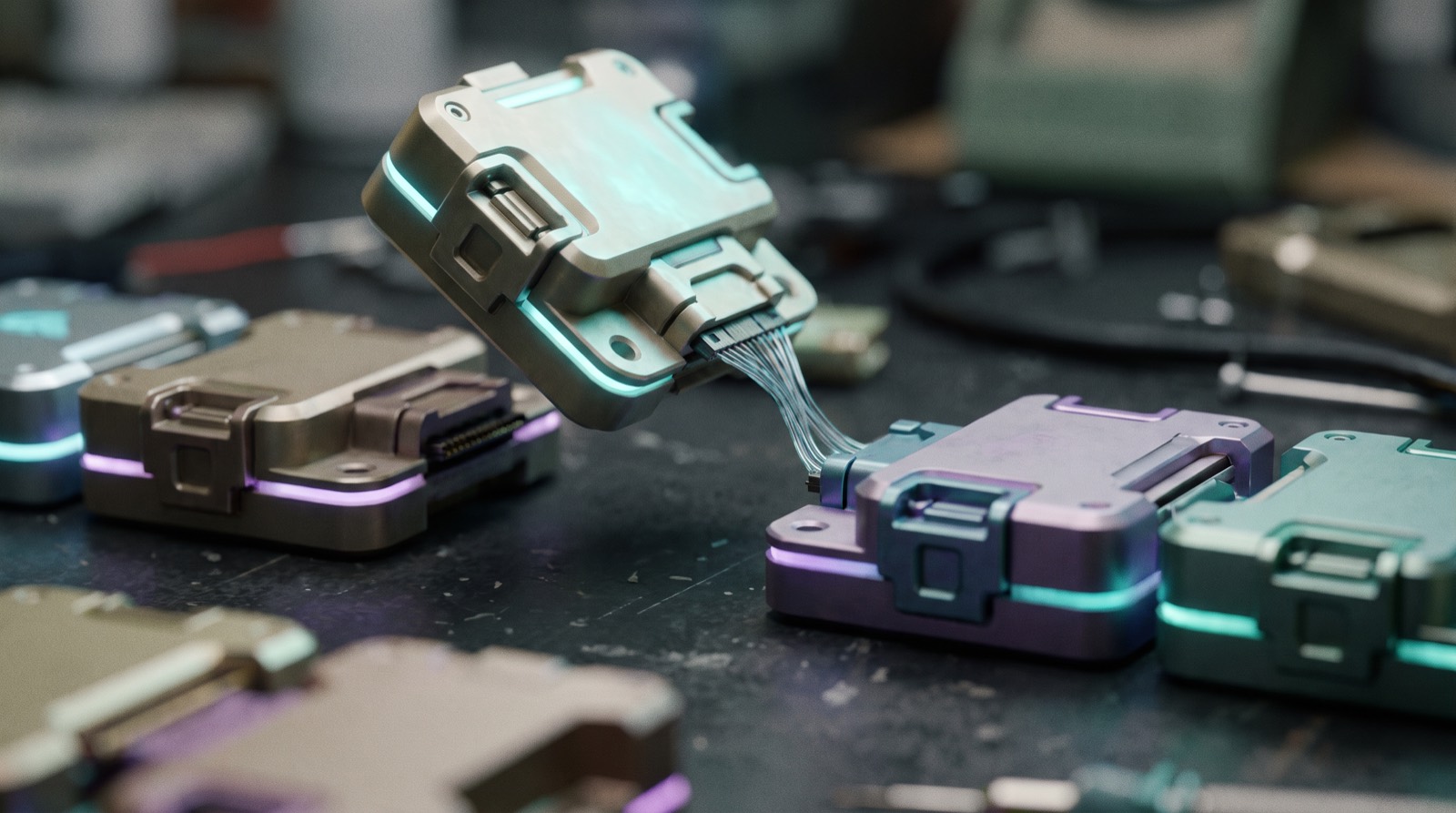
Modular genetic components assembled into a designed circuit. Illustration generated for The CRISPR Atlas — a visual aid, not a photograph or a literal depiction of molecular structure.

Sources

Connected in the Atlas

Every entry on this site is linked to the others it relates to. These connections are part of the record, not a search result.

Apenas informação educativa Esta página é uma referência, não aconselhamento médico. O estado da investigação e o estado regulatório mudam; verifique a data da última atualização acima e confirme qualquer informação importante nas fontes primárias indicadas.