The definitive guide to gene editing.
★
Menu
Home Learn News
Explore Technologies Diseases Treatments Clinical Trials Companies Scientists Genes Research Institutions
Beyond medicine Agriculture Ethics Investing World map
Learn & Tools Start here Glossary A–Z Compare technologies Timeline Lists & Rankings AI Agents ★ Saved API
About About us Methodology Data Sources Editorial Policy Contact Disclaimers

Guided View
New to genetics? We explain every term as you browse, in plain English. Same pages, with the help built in.

Expert View
You already know the biology. Just the content, clean and compact, with no extra explanations. This is the default view.

Interface language
Light mode
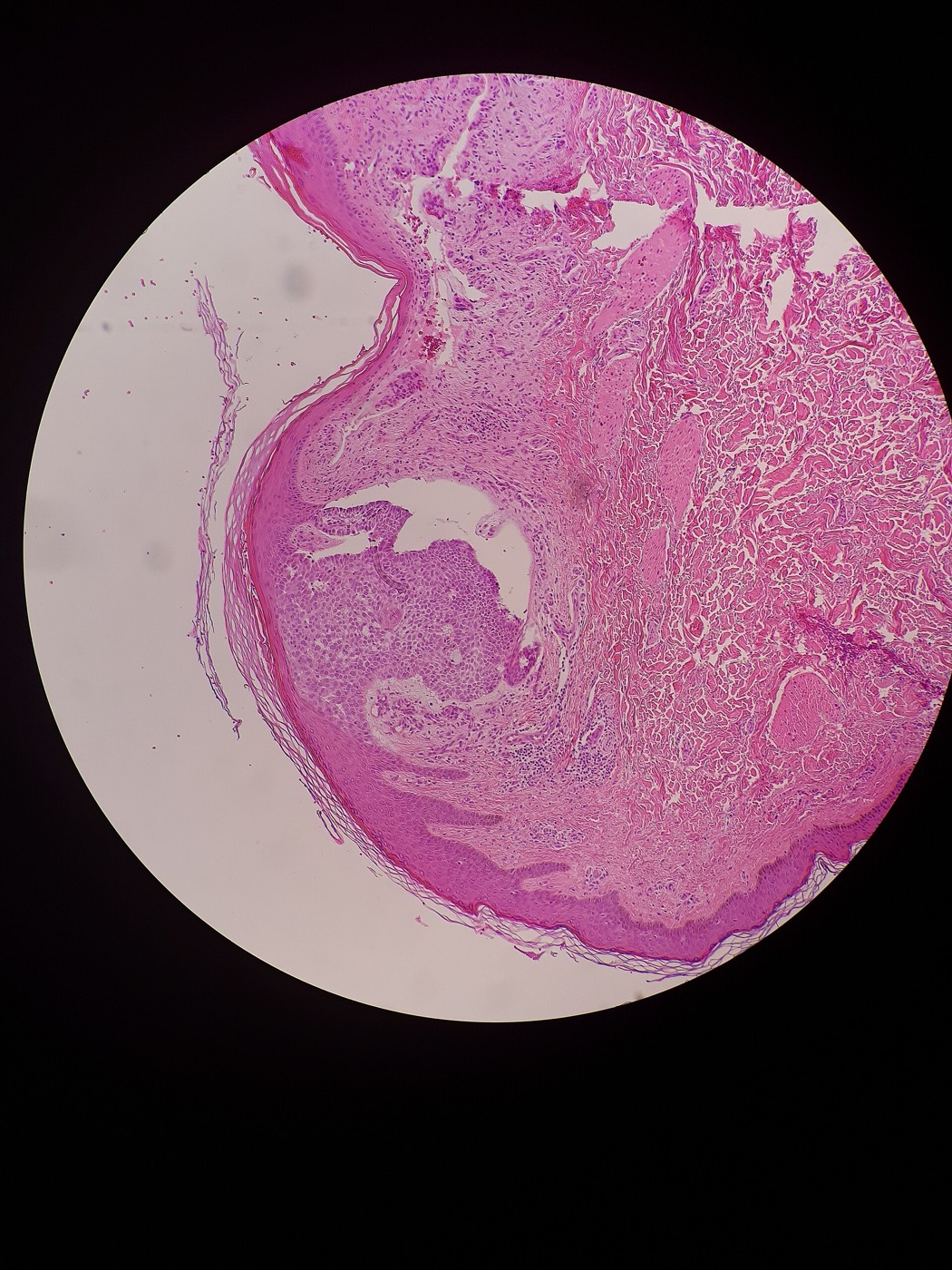
Micrograph of a nodular basal cell cancer with a cleft. H&E stain. Such clefts are caused by shrinkage of mucin during tissue fixation and staining. Robert S Bader. Which histologi

Disease · Cancer

Cancer

Not one disease but hundreds, and the place where gene editing is used to engineer immune cells rather than to correct an inherited fault.

Photo: Mikael Häggström, M.D. Author info - Reusing images- Conflicts of interest:  None Mikael Häggström, M.D.Consent note: Co · CC0 · Wikimedia Commons

Phase II cell therapyimmuneex vivo
Clinical research Being tested in people in registered clinical trials. Being in trials is not evidence that a treatment works or is safe.

Simple explanation

Cancer is not a single illness with a single genetic cause you could edit away. It is many diseases in which cells accumulate damage over a lifetime and start growing without restraint, and the damage is different in every tumour. So gene editing is used here in a completely different way from the inherited diseases on this site: not to fix the tumour, but to modify a patient's immune cells so they can recognise and attack it.

Go deeper

Somatic mutation heterogeneity makes direct correction of tumour genomes therapeutically impractical. Gene editing in oncology is applied instead to immune effector cells: knocking out checkpoint genes such as PDCD1 to relieve T-cell inhibition, disrupting TRAC and B2M to enable allogeneic 'off the shelf' CAR-T products, and multiplexed edits to improve persistence. A landmark 2020 first-in-human study established feasibility, persistence and an acceptable safety profile for multiplex CRISPR-edited T cells.

Why you cannot edit a tumour

Three reasons, each individually sufficient. Every tumour carries a different and evolving set of mutations, so there is no shared target. You would have to reach essentially every malignant cell, since a single survivor regrows the tumour, a delivery requirement nothing approaches. And tumours evolve under pressure, so anything survivable is selected for. Editing the immune system instead sidesteps all three.

What is actually being done
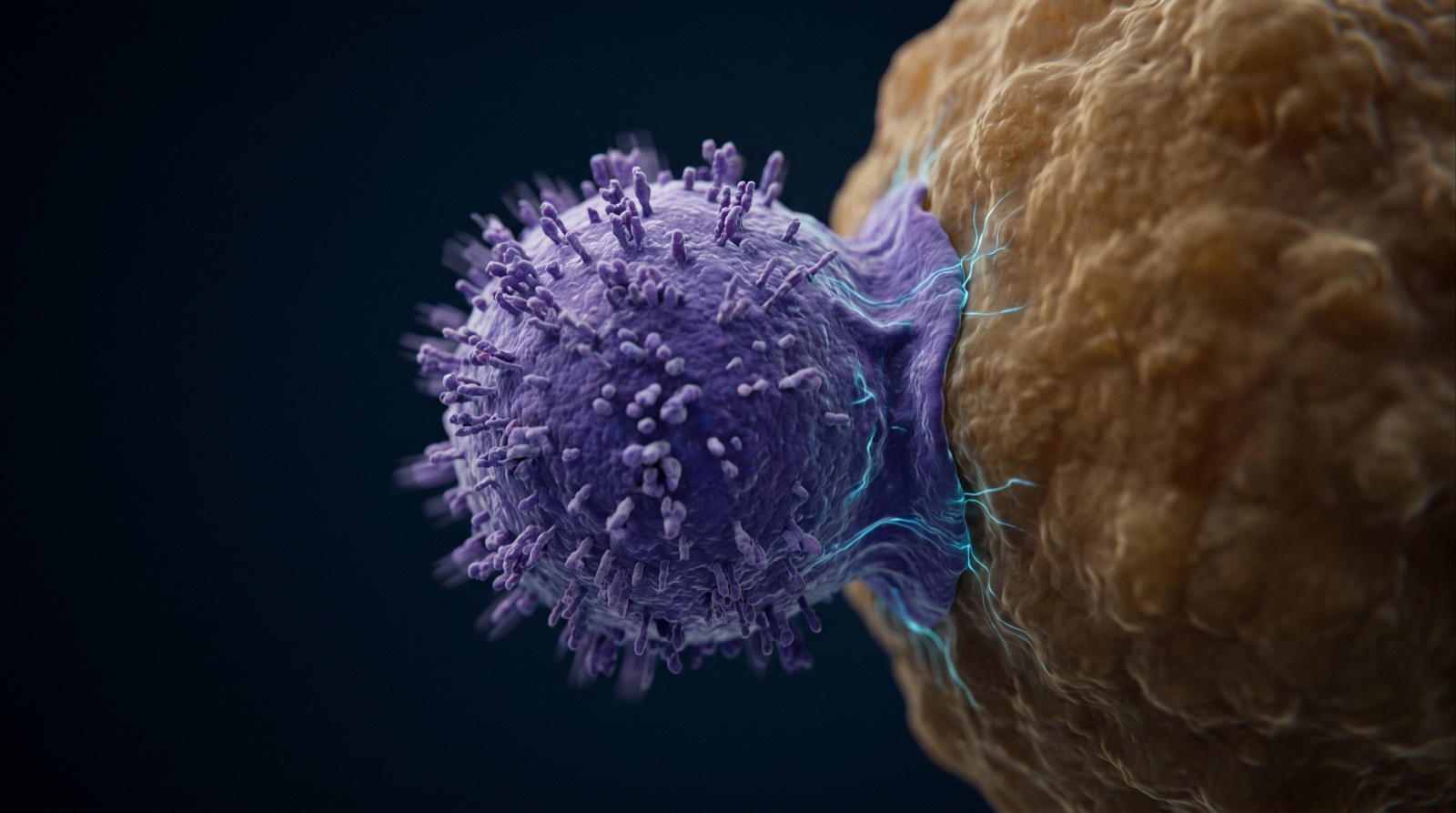
An immune cell pressing against a tumour cell
An engineered immune cell engaging a tumour cell. Illustration generated for CRISPR Decoded: a visual aid, not a photograph or a literal depiction of molecular structure.

Honest status

Approved CAR-T therapies exist and have changed outcomes in several blood cancers, but the approved ones are made with viral gene addition, not gene editing. Editing-based products are in trials. Solid tumours remain far harder than blood cancers for every cell therapy, edited or not.

ImportantNo gene-editing cancer therapy has been approved. Coverage that describes CRISPR as a cancer treatment is describing research.

Sources

Connected in CRISPR Decoded

Every entry on this site is linked to the others it relates to. These connections are part of the record, not a search result.

News connected to this page

Matched automatically to this record. Every item links to its publisher.

STAT+: After two deaths in autoimmune cell therapy trial, Artiva is shutting down Recent deaths are setbacks in drug companies’ interest in applying cancer therapy strategies to autoimmune diseases. STAT Treatments 3h ago↗ Outpace ends an ovarian cancer trial; Incyte data impresses at ESMO Plus news about Genmab, Rumi, Prana and Fractyl. Outpace Bio ends cell therapy trial: The Seattle startup canned a Phase 1 ovarian cancer trial of its… Endpoints News Clinical Trials 7h ago↗ Spatial Proteomics for Precision Oncology In this GEN webinar, Bernd Bodenmiller, PhD (University of Zürich), illustrates this integrated approach through two recent examples. The post Spatial… GEN — Genetic Engineering News Companies 1d ago↗ STAT+: Pharmalittle: We’re reading about a Roche lung cancer drug, a Bristol CAR-T trial death, and more Bristol Myers Squibb reported that one patient died after receiving its investigational CAR-T therapy in an early autoimmune trial STAT Treatments 1d ago↗ Added receptor helps CAR T cells stay in bone marrow in cancer mouse models By turning a patient's own immune cells into stronger cancer-fighting cells, CAR T-cell therapy has transformed how some blood cancers are treated. But… Phys.org — Molecular Biology Treatments 7d ago↗ Bacterial antiviral defense suggests ancient link to human chromosome protection A new antiviral defense system discovered by Columbia scientists could be adapted in the future into a gene editor that slows down aging in our cells and… Phys.org — Molecular Biology Research Oct 12, 2026↗ Scientists reprogram immune cells inside the body to fight cancer Scientists at UC San Francisco have developed a way to create cancer-fighting CAR-T cells directly inside the body, potentially avoiding the slow and… Science Daily — Genes Research Oct 7, 2026↗ CRISPR could help doctors attack blood cancer without destroying healthy cells Researchers used CRISPR to remove CD33 from donor stem cells, potentially giving doctors a way to attack aggressive blood cancers without destroying the… Science Daily — Genes Research Sep 25, 2026↗
Educational information only This page is a reference, not medical advice. Research and regulatory status change; check the last-updated date above and confirm anything important against the primary sources listed.