Der umfassende Leitfaden zum Genome Editing.
Menü
Startseite Lernen Neuigkeiten Den Atlas fragen
Entdecken Technologien Krankheiten Behandlungen Klinische Studien Unternehmen Wissenschaftlerinnen und Wissenschaftler Gene Forschung Institutionen
Jenseits der Medizin Landwirtschaft Ethik Investieren Weltkarte
Lernen & Tools Hier starten Glossar A–Z Technologien vergleichen Zeitstrahl Listen & Rankings KI-Agenten ★ Gespeichert API
Über uns Über uns Methodik Datenquellen Redaktionelle Richtlinien Kontakt Haftungsausschlüsse

🧭 Geführte Ansicht
Neu in der Genetik? Wir erklären jeden Begriff beim Stöbern in einfacher Sprache. Dieselben Seiten, mit integrierter Hilfe.

⚡ Expertenansicht
Du kennst die Biologie bereits. Nur der Inhalt – klar und kompakt, ohne zusätzliche Erklärungen. Das ist die Standardansicht.

Sprache der Benutzeroberfläche
Heller Modus

Technology · Related approach

Synthetic Biology

Designing genetic parts and circuits so that cells perform new functions — the engineering discipline that gene editing serves as a tool.

Phase III engineeringcircuitscells
Clinical research Being tested in people in registered clinical trials. Being in trials is not evidence that a treatment works or is safe.

Einfache Erklärung

Gene editing changes what is written in a cell's instructions. Synthetic biology asks what you would write if you were designing from scratch: sensors that detect a condition, switches that respond, circuits that make a cell do something it never did before. CAR-T cancer therapy is the best-known example — immune cells given a new receptor so they recognise tumours they would otherwise ignore.

Tiefer eintauchen

Synthetic biology applies engineering principles — standardised parts, modular composition, design-build-test cycles — to biological systems. In medicine its most successful output is engineered cell therapy, notably CAR-T. Gene editing is one tool within it: editing is how synthetic constructs are installed and how unwanted native functions are removed, particularly in allogeneic products where the donor cells' own receptors must be disabled.

Where editing and synthetic biology meet

Allogeneic — 'off the shelf' — cell therapy is the clearest intersection. Making one donor's cells usable in many patients requires removing the T-cell receptor so the cells do not attack the recipient, and removing markers so the recipient does not immediately destroy them. That is several simultaneous edits in one cell, which is why multiplex editing capability is a competitive advantage in this field.

Where editing and synthetic biology meet
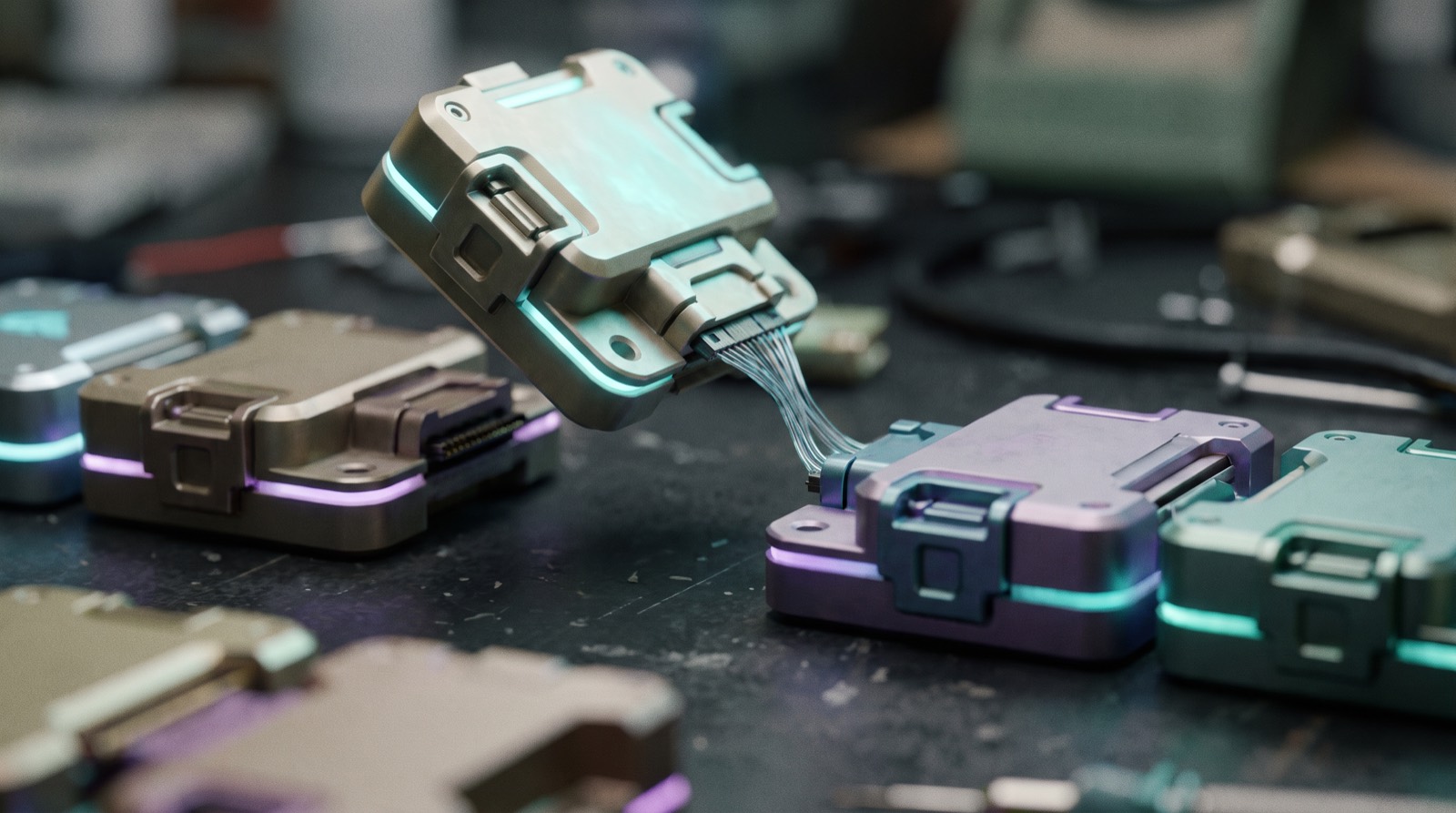
Modular genetic components assembled into a designed circuit. Illustration generated for The CRISPR Atlas — a visual aid, not a photograph or a literal depiction of molecular structure.

Sources

Connected in the Atlas

Every entry on this site is linked to the others it relates to. These connections are part of the record, not a search result.

Nur zu Bildungszwecken Diese Seite ist eine Referenz, keine medizinische Beratung. Forschungs- und Zulassungsstatus können sich ändern; beachten Sie das oben angegebene Aktualisierungsdatum und gleichen Sie wichtige Informationen mit den aufgeführten Primärquellen ab.