The definitive guide to gene editing.
Menu
Home Learn News Ask the Atlas
Explore Technologies Diseases Treatments Clinical Trials Companies Scientists Genes Research Institutions
Beyond medicine Agriculture Ethics Investing World map
Learn & Tools Start here Glossary A–Z Compare technologies Timeline Lists & Rankings AI Agents ★ Saved API
About About us Methodology Data Sources Editorial Policy Contact Disclaimers

🧭 Guided View
New to genetics? We explain every term as you browse, in plain English. Same pages, with the help built in.

⚡ Expert View
You already know the biology. Just the content — clean and compact, no extra explanations. This is the default view.

Interface language
Light mode

Technology · Related approach

Synthetic Biology

Designing genetic parts and circuits so that cells perform new functions — the engineering discipline that gene editing serves as a tool.

Phase III engineeringcircuitscells
Clinical research Being tested in people in registered clinical trials. Being in trials is not evidence that a treatment works or is safe.

Simple explanation

Gene editing changes what is written in a cell's instructions. Synthetic biology asks what you would write if you were designing from scratch: sensors that detect a condition, switches that respond, circuits that make a cell do something it never did before. CAR-T cancer therapy is the best-known example — immune cells given a new receptor so they recognise tumours they would otherwise ignore.

Go deeper

Synthetic biology applies engineering principles — standardised parts, modular composition, design-build-test cycles — to biological systems. In medicine its most successful output is engineered cell therapy, notably CAR-T. Gene editing is one tool within it: editing is how synthetic constructs are installed and how unwanted native functions are removed, particularly in allogeneic products where the donor cells' own receptors must be disabled.

Where editing and synthetic biology meet

Allogeneic — 'off the shelf' — cell therapy is the clearest intersection. Making one donor's cells usable in many patients requires removing the T-cell receptor so the cells do not attack the recipient, and removing markers so the recipient does not immediately destroy them. That is several simultaneous edits in one cell, which is why multiplex editing capability is a competitive advantage in this field.

Where editing and synthetic biology meet
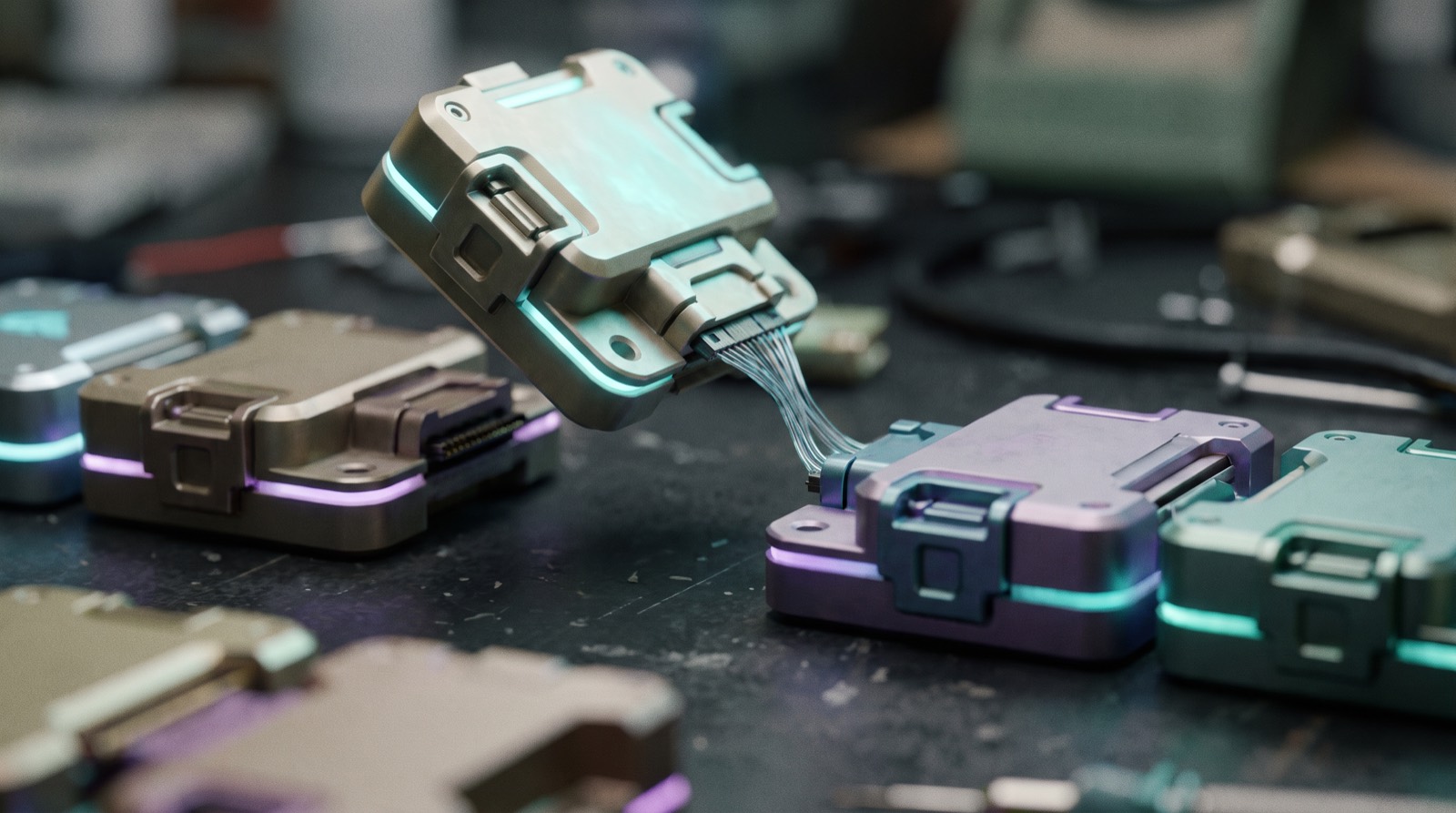
Modular genetic components assembled into a designed circuit. Illustration generated for The CRISPR Atlas — a visual aid, not a photograph or a literal depiction of molecular structure.

Sources

Connected in the Atlas

Every entry on this site is linked to the others it relates to. These connections are part of the record, not a search result.

Educational information only This page is a reference, not medical advice. Research and regulatory status change; check the last-updated date above and confirm anything important against the primary sources listed.