La guía definitiva sobre edición genética.
Menú
Inicio Aprender Noticias Pregunta al Atlas
Explorar Tecnologías Enfermedades Tratamientos Ensayos clínicos Empresas Científicos Genes Investigación Instituciones
Más allá de la medicina Agricultura Ética Inversión Mapa mundial
Aprender y herramientas Empieza aquí Glosario A–Z Comparar tecnologías Cronología Listas y rankings Agentes de IA ★ Guardado API
Acerca de Quiénes somos Metodología Fuentes de datos Política editorial Contacto Avisos legales

🧭 Vista guiada
¿Eres nuevo en genética? Explicamos cada término mientras navegas, en un lenguaje sencillo. Las mismas páginas, con la ayuda incorporada.

⚡ Opinión experta
Ya conoces la biología. Solo el contenido — limpio y compacto, sin explicaciones adicionales. Esta es la vista predeterminada.

Idioma de la interfaz
Modo claro

Disease · Eye disease

Inherited Blindness

Inherited retinal disease was where in vivo CRISPR was first injected directly into a human organ — the eye being small, enclosed and immune-privileged.

Phase I/II eyein vivoCEP290
Clinical research Being tested in people in registered clinical trials. Being in trials is not evidence that a treatment works or is safe.

Explicación sencilla

The retina is a thin sheet of light-sensing cells at the back of the eye, and dozens of inherited faults can destroy it. The eye is the easiest place in the body to try gene editing: it is tiny, so you need very little of anything; it is sealed off, so what you inject stays put; the immune system leaves it relatively alone; and you can watch the result directly and measure whether vision improved.

Profundizar

Inherited retinal dystrophies are caused by variants in over 280 genes. EDIT-101 (Brilliance) delivered CRISPR-Cas9 by subretinal AAV injection to excise the intronic CEP290 c.2991+1655A>G variant causing Leber congenital amaurosis type 10 — the first in vivo CRISPR administration to a human organ. The trial reported meaningful vision improvement in a subset of participants but was discontinued for strategic reasons given the very small eligible population, not for safety.

What the Brilliance trial showed and did not show

Published results showed clinically meaningful improvement in a minority of participants with an acceptable safety profile — genuine proof that in vivo editing can produce functional benefit in a human organ. It was then discontinued because the eligible population for that specific variant was too small to support a commercial programme.

That ending is worth sitting with. It was not a scientific failure; it was an economic one. For ultra-rare variants the science can work and the medicine still not get made, which is exactly the problem the FDA's 2026 draft framework for individualised therapies is trying to address.

What the Brilliance trial showed and did not show
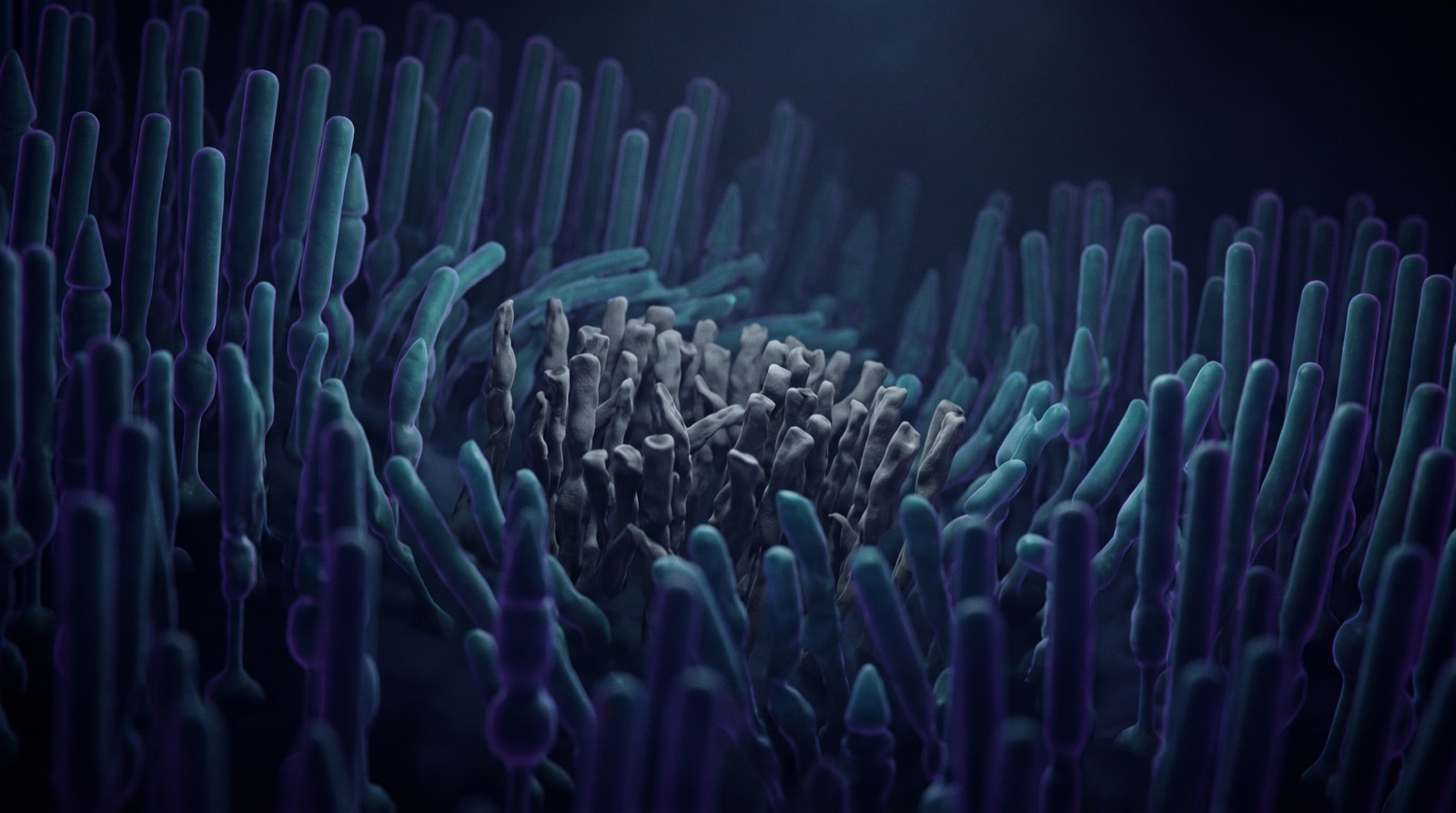
Photoreceptors in the retina, with a degenerating region at the centre. Illustration generated for The CRISPR Atlas — a visual aid, not a photograph or a literal depiction of molecular structure.

Sources

Connected in the Atlas

Every entry on this site is linked to the others it relates to. These connections are part of the record, not a search result.

Solo información educativa Esta página es una referencia, no asesoramiento médico. El estado de la investigación y la situación regulatoria cambian; comprueba la fecha de última actualización que aparece arriba y confirma cualquier dato importante con las fuentes primarias indicadas.