Der umfassende Leitfaden zum Genome Editing.
Menü
Startseite Lernen Neuigkeiten Den Atlas fragen
Entdecken Technologien Krankheiten Behandlungen Klinische Studien Unternehmen Wissenschaftlerinnen und Wissenschaftler Gene Forschung Institutionen
Jenseits der Medizin Landwirtschaft Ethik Investieren Weltkarte
Lernen & Tools Hier starten Glossar A–Z Technologien vergleichen Zeitstrahl Listen & Rankings KI-Agenten ★ Gespeichert API
Über uns Über uns Methodik Datenquellen Redaktionelle Richtlinien Kontakt Haftungsausschlüsse

🧭 Geführte Ansicht
Neu in der Genetik? Wir erklären jeden Begriff beim Stöbern in einfacher Sprache. Dieselben Seiten, mit integrierter Hilfe.

⚡ Expertenansicht
Du kennst die Biologie bereits. Nur der Inhalt – klar und kompakt, ohne zusätzliche Erklärungen. Das ist die Standardansicht.

Sprache der Benutzeroberfläche
Heller Modus

Disease · Eye disease

Inherited Blindness

Inherited retinal disease was where in vivo CRISPR was first injected directly into a human organ — the eye being small, enclosed and immune-privileged.

Phase I/II eyein vivoCEP290
Clinical research Being tested in people in registered clinical trials. Being in trials is not evidence that a treatment works or is safe.

Einfache Erklärung

The retina is a thin sheet of light-sensing cells at the back of the eye, and dozens of inherited faults can destroy it. The eye is the easiest place in the body to try gene editing: it is tiny, so you need very little of anything; it is sealed off, so what you inject stays put; the immune system leaves it relatively alone; and you can watch the result directly and measure whether vision improved.

Tiefer eintauchen

Inherited retinal dystrophies are caused by variants in over 280 genes. EDIT-101 (Brilliance) delivered CRISPR-Cas9 by subretinal AAV injection to excise the intronic CEP290 c.2991+1655A>G variant causing Leber congenital amaurosis type 10 — the first in vivo CRISPR administration to a human organ. The trial reported meaningful vision improvement in a subset of participants but was discontinued for strategic reasons given the very small eligible population, not for safety.

What the Brilliance trial showed and did not show

Published results showed clinically meaningful improvement in a minority of participants with an acceptable safety profile — genuine proof that in vivo editing can produce functional benefit in a human organ. It was then discontinued because the eligible population for that specific variant was too small to support a commercial programme.

That ending is worth sitting with. It was not a scientific failure; it was an economic one. For ultra-rare variants the science can work and the medicine still not get made, which is exactly the problem the FDA's 2026 draft framework for individualised therapies is trying to address.

What the Brilliance trial showed and did not show
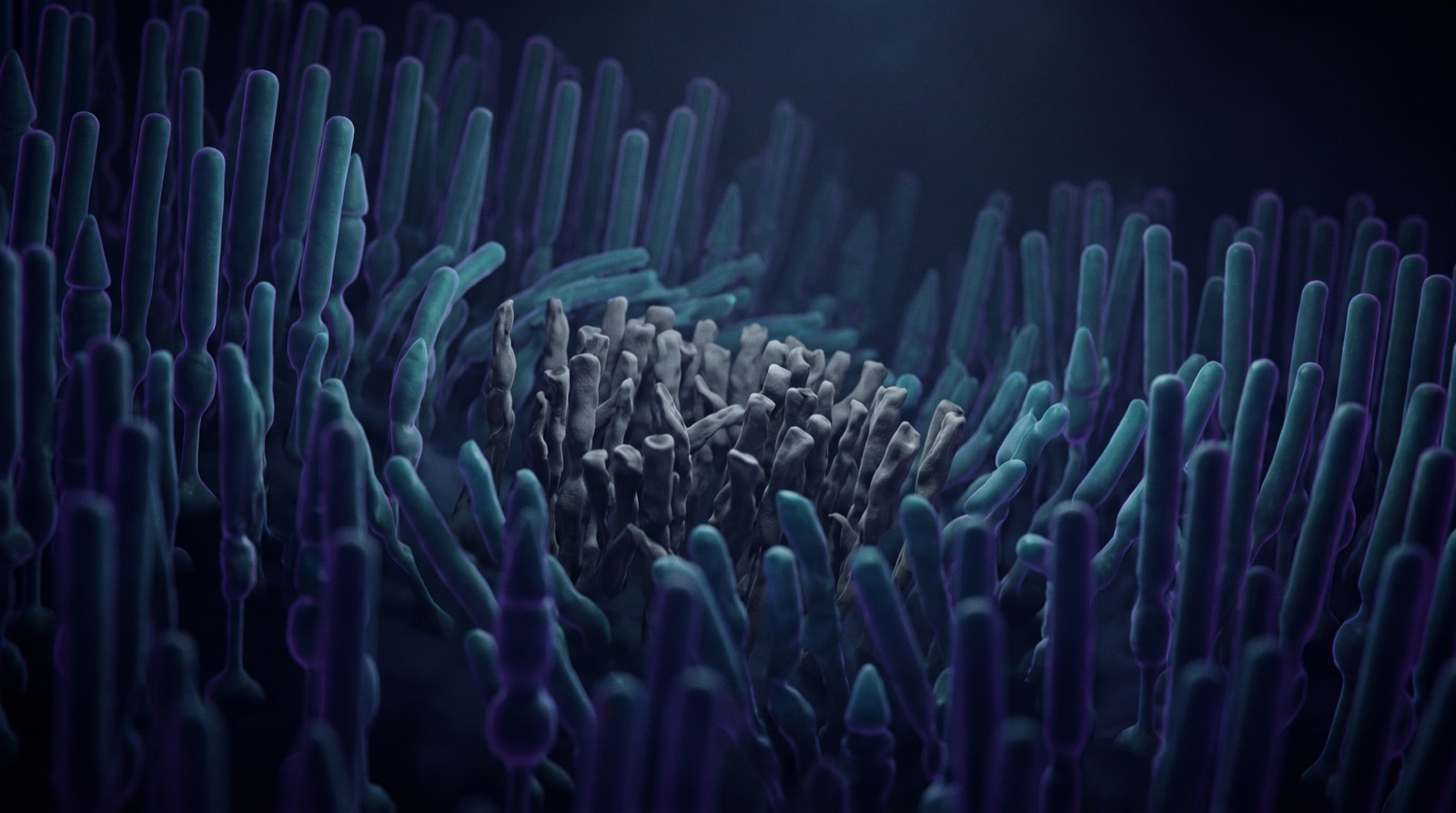
Photoreceptors in the retina, with a degenerating region at the centre. Illustration generated for The CRISPR Atlas — a visual aid, not a photograph or a literal depiction of molecular structure.

Sources

Connected in the Atlas

Every entry on this site is linked to the others it relates to. These connections are part of the record, not a search result.

Nur zu Bildungszwecken Diese Seite ist eine Referenz, keine medizinische Beratung. Forschungs- und Zulassungsstatus können sich ändern; beachten Sie das oben angegebene Aktualisierungsdatum und gleichen Sie wichtige Informationen mit den aufgeführten Primärquellen ab.