Eenvoudige uitleg
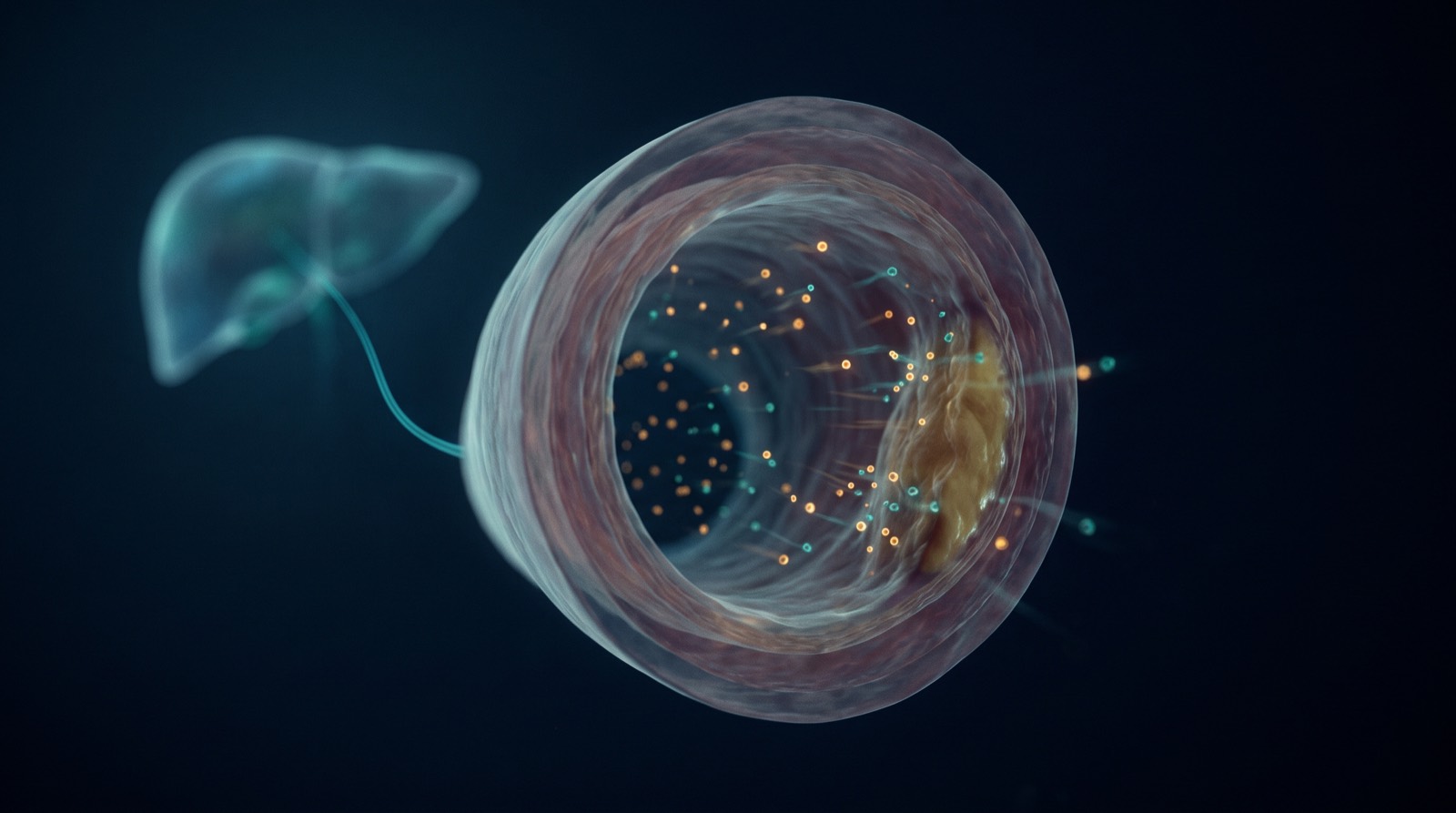
Cholesterol carried in LDL particles builds up in artery walls over decades and eventually causes heart attacks and strokes. Some people inherit a version of this that is far more severe, with dangerous cholesterol levels from childhood. Statins and injections work well but only while you keep taking them, and many people do not. The idea being tested is to switch off a single liver gene, once, and lower LDL permanently.
Dieper ingaan
Atherosclerotic cardiovascular disease driven by elevated LDL cholesterol is the leading cause of death globally; heterozygous familial hypercholesterolemia affects roughly 1 in 250 people and causes markedly premature coronary disease. PCSK9 loss-of-function variants occur naturally and are associated with lifelong low LDL and reduced cardiovascular events with no evident harm, an unusually strong human-genetic rationale. Base-editing programmes install a PCSK9 loss-of-function change in hepatocytes; other programmes target LDLR or ANGPTL3.
Why this indication is different from the others on this site
Every other editing programme here treats a rare, severe disease where the alternative is poor. This one targets a common condition with cheap, effective, well-understood existing treatments. That raises the evidentiary bar enormously: a permanent, irreversible intervention has to be measured against a statin that costs pennies and can be stopped at any time.
The counterargument is adherence. A large fraction of people stop taking cardiovascular medication within a year or two, and the benefit disappears with them. A one-time treatment removes adherence from the equation entirely. Whether that justifies permanence is the genuine open question, and it is more an argument about medicine than about molecular biology.
Where programmes stand
VERVE-102, a base editor targeting PCSK9, reported durable LDL reduction in Phase 1b; Eli Lilly acquired Verve Therapeutics in 2025 for approximately $1 billion plus contingent value rights, one of which is tied to dosing the first patient in a US Phase 3 trial. Editas Medicine reset its pipeline around EDIT-401, an LDLR-targeted in vivo candidate, reporting reductions of about 90 per cent or more in LDL-C, Lp(a) and ApoB in non-human primates and preparing a first-in-human study in heterozygous familial hypercholesterolemia.