わかりやすい説明
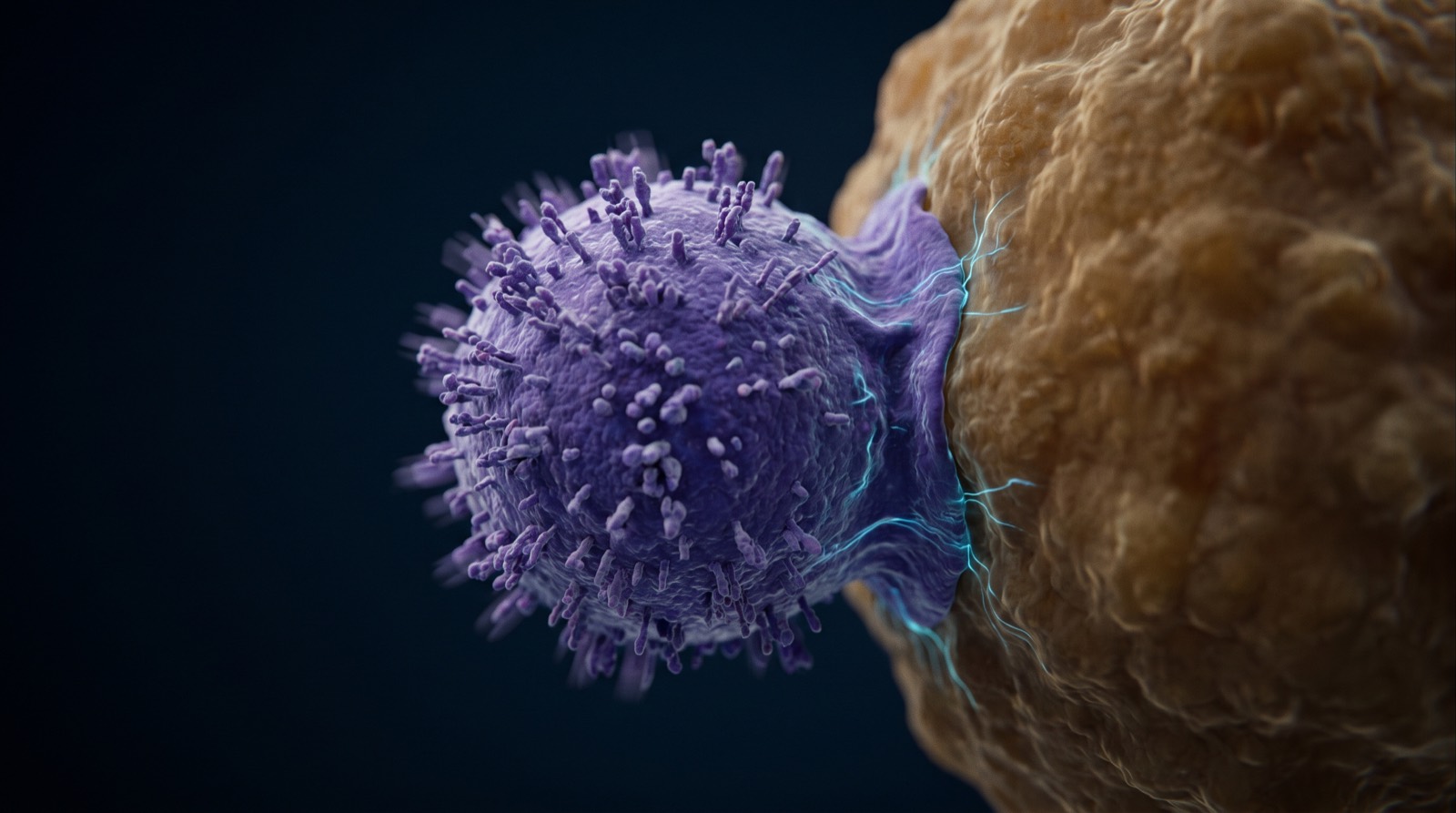
Cancer is not a single illness with a single genetic cause you could edit away. It is many diseases in which cells accumulate damage over a lifetime and start growing without restraint, and the damage is different in every tumour. So gene editing is used here in a completely different way from the inherited diseases on this site: not to fix the tumour, but to modify a patient's immune cells so they can recognise and attack it.
さらに深く掘り下げる
Somatic mutation heterogeneity makes direct correction of tumour genomes therapeutically impractical. Gene editing in oncology is applied instead to immune effector cells: knocking out checkpoint genes such as PDCD1 to relieve T-cell inhibition, disrupting TRAC and B2M to enable allogeneic 'off the shelf' CAR-T products, and multiplexed edits to improve persistence. A landmark 2020 first-in-human study established feasibility, persistence and an acceptable safety profile for multiplex CRISPR-edited T cells.
Why you cannot edit a tumour
Three reasons, each individually sufficient. Every tumour carries a different and evolving set of mutations, so there is no shared target. You would have to reach essentially every malignant cell, since a single survivor regrows the tumour, a delivery requirement nothing approaches. And tumours evolve under pressure, so anything survivable is selected for. Editing the immune system instead sidesteps all three.
What is actually being done
Honest status
Approved CAR-T therapies exist and have changed outcomes in several blood cancers, but the approved ones are made with viral gene addition, not gene editing. Editing-based products are in trials. Solid tumours remain far harder than blood cancers for every cell therapy, edited or not.
Sources
- Science (Stadtmauer et al.) · 2020
CRISPR-engineered T cells in patients with refractory cancer ↗


