La guida definitiva all'editing genico.
Menu
Home Scopri Notizie Chiedi all'Atlas
Esplora Tecnologie Malattie Trattamenti Sperimentazioni cliniche Aziende Scienziati Geni Ricerca Istituzioni
Oltre la medicina Agricoltura Etica Investimenti Mappa del mondo
Scopri e strumenti Inizia da qui Glossario A–Z Confronta le tecnologie Cronologia Elenchi e classifiche Agenti IA ★ Salvato API
Informazioni Chi siamo Metodologia Fonti dei dati Politica editoriale Contatti Note legali

🧭 Vista guidata
Sei nuovo alla genetica? Spieghiamo ogni termine mentre navighi, in parole semplici. Le stesse pagine, con il supporto già incluso.

⚡ Parere degli esperti
Conosci già la biologia. Solo i contenuti — chiari e compatti, senza spiegazioni aggiuntive. Questa è la visualizzazione predefinita.

Lingua dell'interfaccia
Modalità chiara

Disease · Cancer

Cancer

Not one disease but hundreds — and the place where gene editing is used to engineer immune cells rather than to correct an inherited fault.

Phase II cell therapyimmuneex vivo
Clinical research Being tested in people in registered clinical trials. Being in trials is not evidence that a treatment works or is safe.

Spiegazione semplice

Cancer is not a single illness with a single genetic cause you could edit away. It is many diseases in which cells accumulate damage over a lifetime and start growing without restraint, and the damage is different in every tumour. So gene editing is used here in a completely different way from the inherited diseases on this site: not to fix the tumour, but to modify a patient's immune cells so they can recognise and attack it.

Approfondisci

Somatic mutation heterogeneity makes direct correction of tumour genomes therapeutically impractical. Gene editing in oncology is applied instead to immune effector cells: knocking out checkpoint genes such as PDCD1 to relieve T-cell inhibition, disrupting TRAC and B2M to enable allogeneic 'off the shelf' CAR-T products, and multiplexed edits to improve persistence. A landmark 2020 first-in-human study established feasibility, persistence and an acceptable safety profile for multiplex CRISPR-edited T cells.

Why you cannot edit a tumour

Three reasons, each individually sufficient. Every tumour carries a different and evolving set of mutations, so there is no shared target. You would have to reach essentially every malignant cell, since a single survivor regrows the tumour — a delivery requirement nothing approaches. And tumours evolve under pressure, so anything survivable is selected for. Editing the immune system instead sidesteps all three.

What is actually being done
What is actually being done
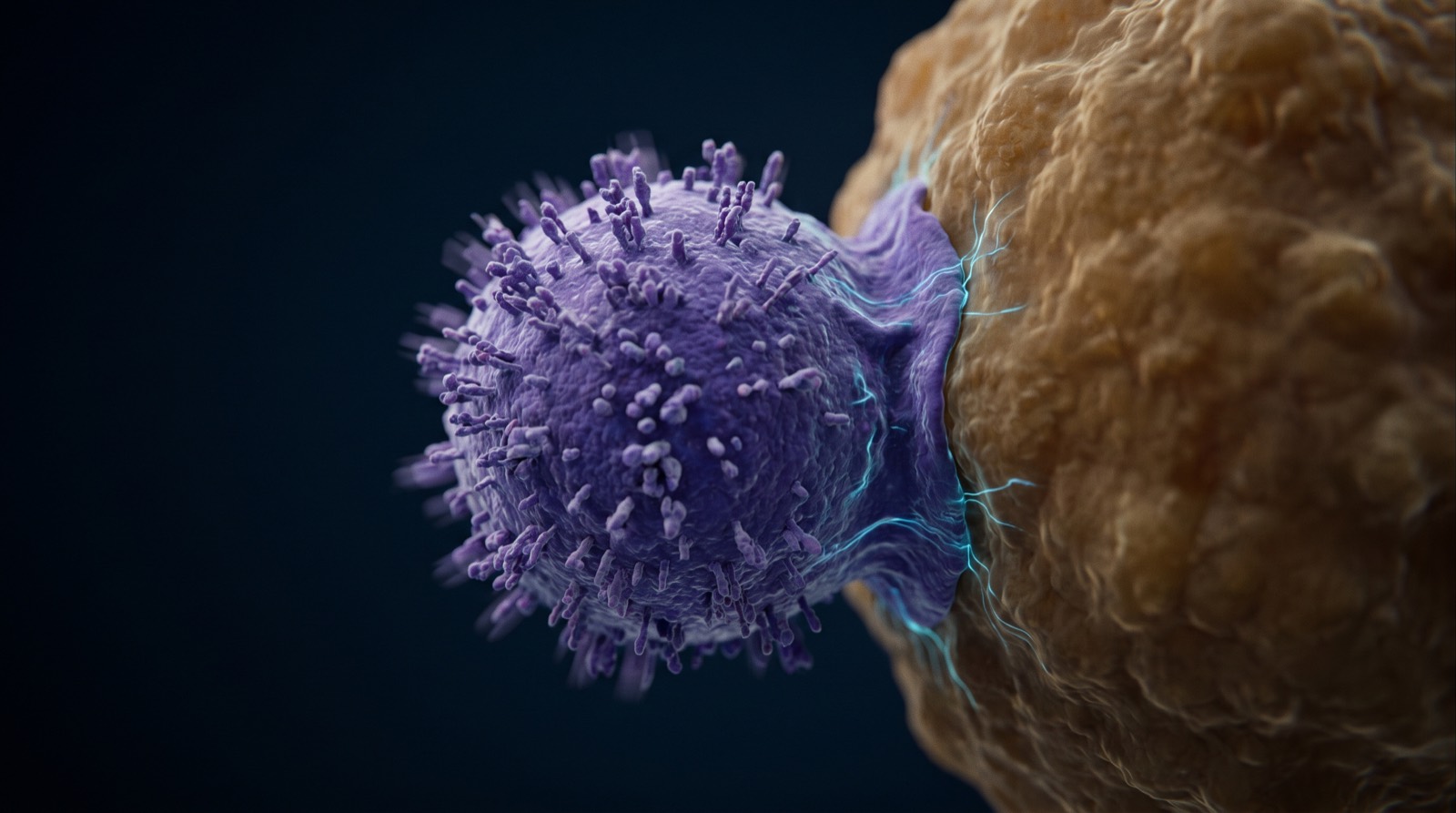
An engineered immune cell engaging a tumour cell. Illustration generated for The CRISPR Atlas — a visual aid, not a photograph or a literal depiction of molecular structure.

Honest status

Approved CAR-T therapies exist and have changed outcomes in several blood cancers — but the approved ones are made with viral gene addition, not gene editing. Editing-based products are in trials. Solid tumours remain far harder than blood cancers for every cell therapy, edited or not.

ImportantNo gene-editing cancer therapy has been approved. Coverage that describes CRISPR as a cancer treatment is describing research.

Sources

Connected in the Atlas

Every entry on this site is linked to the others it relates to. These connections are part of the record, not a search result.

Notizie collegate a questa pagina

Abbinato automaticamente a questa scheda. Ogni elemento rimanda al suo editore.

Solo informazioni educative Questa pagina è una risorsa di riferimento, non una consulenza medica. Lo stato della ricerca e delle autorizzazioni regolatorie cambia; controlla la data dell'ultimo aggiornamento in alto e verifica le informazioni importanti nelle fonti primarie elencate.