Panduan definitif tentang penyuntingan gen.
Menu
Beranda Pelajari Berita Tanya Atlas
Jelajahi Teknologi Penyakit Perawatan Uji Klinis Perusahaan Ilmuwan Gen-gen Penelitian Institusi
Di luar dunia medis Pertanian Etika Investasi Peta dunia
Pelajari & Alat Mulai di sini Glosarium A–Z Bandingkan teknologi Linimasa Daftar & Peringkat Agen AI ★ Tersimpan API
Tentang Tentang kami Metodologi Sumber Data Kebijakan Editorial Kontak Penafian

🧭 Tampilan Terpandu
Baru mengenal genetika? Kami menjelaskan setiap istilah saat kamu menjelajah, dalam bahasa yang mudah dipahami. Halaman yang sama, dengan bantuan yang sudah tersedia.

⚡ Pandangan Ahli
Kamu sudah mengenal biologinya. Cukup kontennya — ringkas dan padat, tanpa penjelasan tambahan. Ini adalah tampilan default.

Bahasa antarmuka
Mode terang

Disease · Cancer

Cancer

Not one disease but hundreds — and the place where gene editing is used to engineer immune cells rather than to correct an inherited fault.

Phase II cell therapyimmuneex vivo
Clinical research Being tested in people in registered clinical trials. Being in trials is not evidence that a treatment works or is safe.

Penjelasan sederhana

Cancer is not a single illness with a single genetic cause you could edit away. It is many diseases in which cells accumulate damage over a lifetime and start growing without restraint, and the damage is different in every tumour. So gene editing is used here in a completely different way from the inherited diseases on this site: not to fix the tumour, but to modify a patient's immune cells so they can recognise and attack it.

Pelajari lebih dalam

Somatic mutation heterogeneity makes direct correction of tumour genomes therapeutically impractical. Gene editing in oncology is applied instead to immune effector cells: knocking out checkpoint genes such as PDCD1 to relieve T-cell inhibition, disrupting TRAC and B2M to enable allogeneic 'off the shelf' CAR-T products, and multiplexed edits to improve persistence. A landmark 2020 first-in-human study established feasibility, persistence and an acceptable safety profile for multiplex CRISPR-edited T cells.

Why you cannot edit a tumour

Three reasons, each individually sufficient. Every tumour carries a different and evolving set of mutations, so there is no shared target. You would have to reach essentially every malignant cell, since a single survivor regrows the tumour — a delivery requirement nothing approaches. And tumours evolve under pressure, so anything survivable is selected for. Editing the immune system instead sidesteps all three.

What is actually being done
What is actually being done
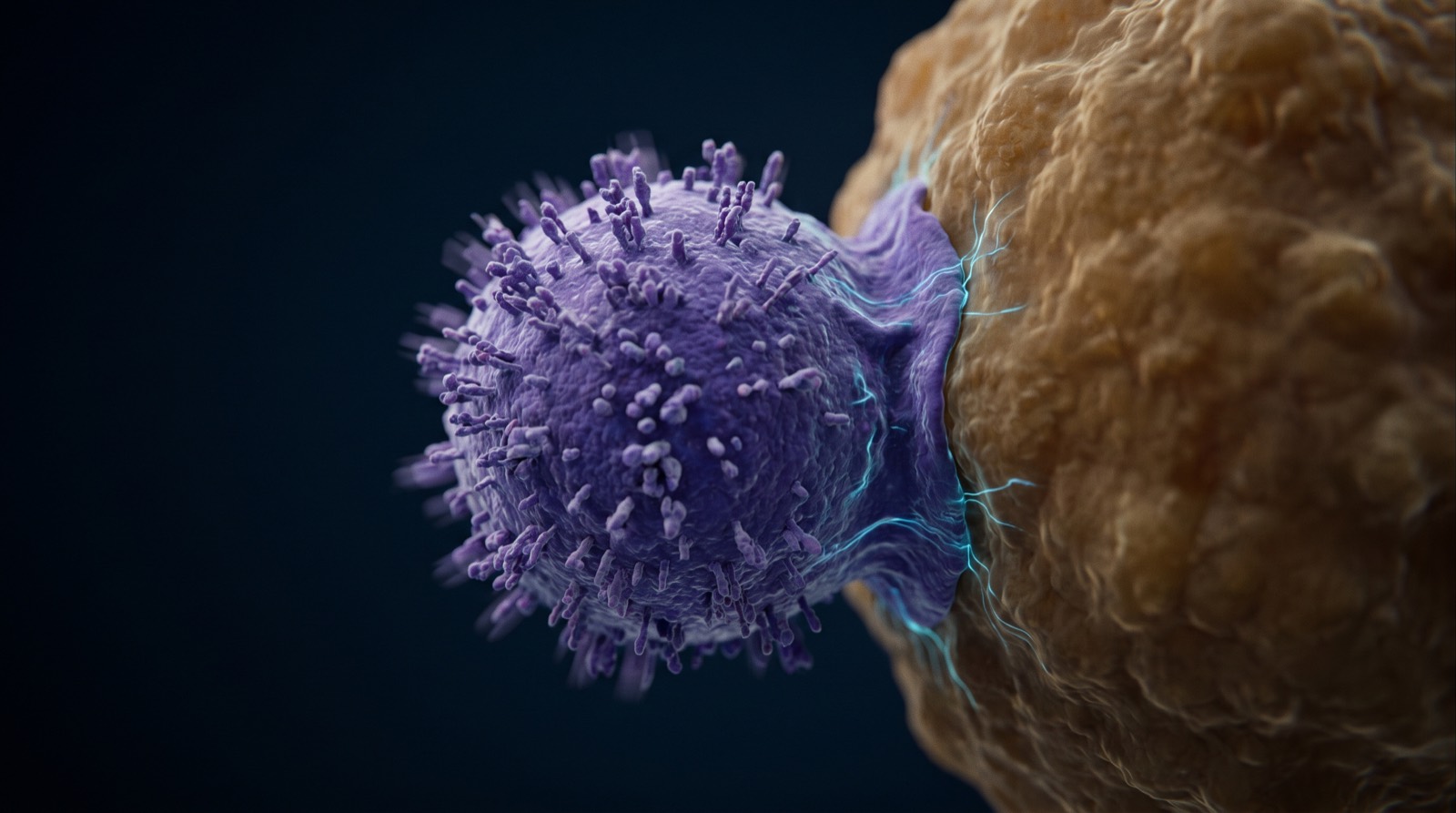
An engineered immune cell engaging a tumour cell. Illustration generated for The CRISPR Atlas — a visual aid, not a photograph or a literal depiction of molecular structure.

Honest status

Approved CAR-T therapies exist and have changed outcomes in several blood cancers — but the approved ones are made with viral gene addition, not gene editing. Editing-based products are in trials. Solid tumours remain far harder than blood cancers for every cell therapy, edited or not.

ImportantNo gene-editing cancer therapy has been approved. Coverage that describes CRISPR as a cancer treatment is describing research.

Sources

Connected in the Atlas

Every entry on this site is linked to the others it relates to. These connections are part of the record, not a search result.

Berita yang terkait dengan halaman ini

Dicocokkan secara otomatis dengan catatan ini. Setiap item tertaut ke penerbitnya.

Hanya informasi edukatif Halaman ini adalah referensi, bukan nasihat medis. Status riset dan regulasi dapat berubah; periksa tanggal pembaruan terakhir di atas dan konfirmasi hal-hal penting dengan sumber primer yang tercantum.