Le guide de référence sur l'édition génomique.
Menu
Accueil Apprendre Actualités Demandez à l'Atlas
Explorer Technologies Maladies Traitements Essais cliniques Entreprises Scientifiques Gènes Recherche Institutions
Au-delà de la médecine Agriculture Éthique Investissement Carte du monde
Apprendre & Outils Commencer ici Glossaire A–Z Comparer les technologies Chronologie Listes & Classements Agents IA ★ Enregistré API
À propos À propos de nous Méthodologie Sources de données Politique éditoriale Contact Avertissements

🧭 Vue guidée
Nouveau en génétique ? Nous expliquons chaque terme au fil de votre navigation, en langage clair. Les mêmes pages, avec l'aide intégrée.

⚡ Point de vue d'expert
Vous connaissez déjà la biologie. Uniquement le contenu — clair et concis, sans explications supplémentaires. C'est l'affichage par défaut.

Langue de l'interface
Mode clair

Disease · Cancer

Cancer

Not one disease but hundreds — and the place where gene editing is used to engineer immune cells rather than to correct an inherited fault.

Phase II cell therapyimmuneex vivo
Clinical research Being tested in people in registered clinical trials. Being in trials is not evidence that a treatment works or is safe.

Explication simple

Cancer is not a single illness with a single genetic cause you could edit away. It is many diseases in which cells accumulate damage over a lifetime and start growing without restraint, and the damage is different in every tumour. So gene editing is used here in a completely different way from the inherited diseases on this site: not to fix the tumour, but to modify a patient's immune cells so they can recognise and attack it.

Aller plus loin

Somatic mutation heterogeneity makes direct correction of tumour genomes therapeutically impractical. Gene editing in oncology is applied instead to immune effector cells: knocking out checkpoint genes such as PDCD1 to relieve T-cell inhibition, disrupting TRAC and B2M to enable allogeneic 'off the shelf' CAR-T products, and multiplexed edits to improve persistence. A landmark 2020 first-in-human study established feasibility, persistence and an acceptable safety profile for multiplex CRISPR-edited T cells.

Why you cannot edit a tumour

Three reasons, each individually sufficient. Every tumour carries a different and evolving set of mutations, so there is no shared target. You would have to reach essentially every malignant cell, since a single survivor regrows the tumour — a delivery requirement nothing approaches. And tumours evolve under pressure, so anything survivable is selected for. Editing the immune system instead sidesteps all three.

What is actually being done
What is actually being done
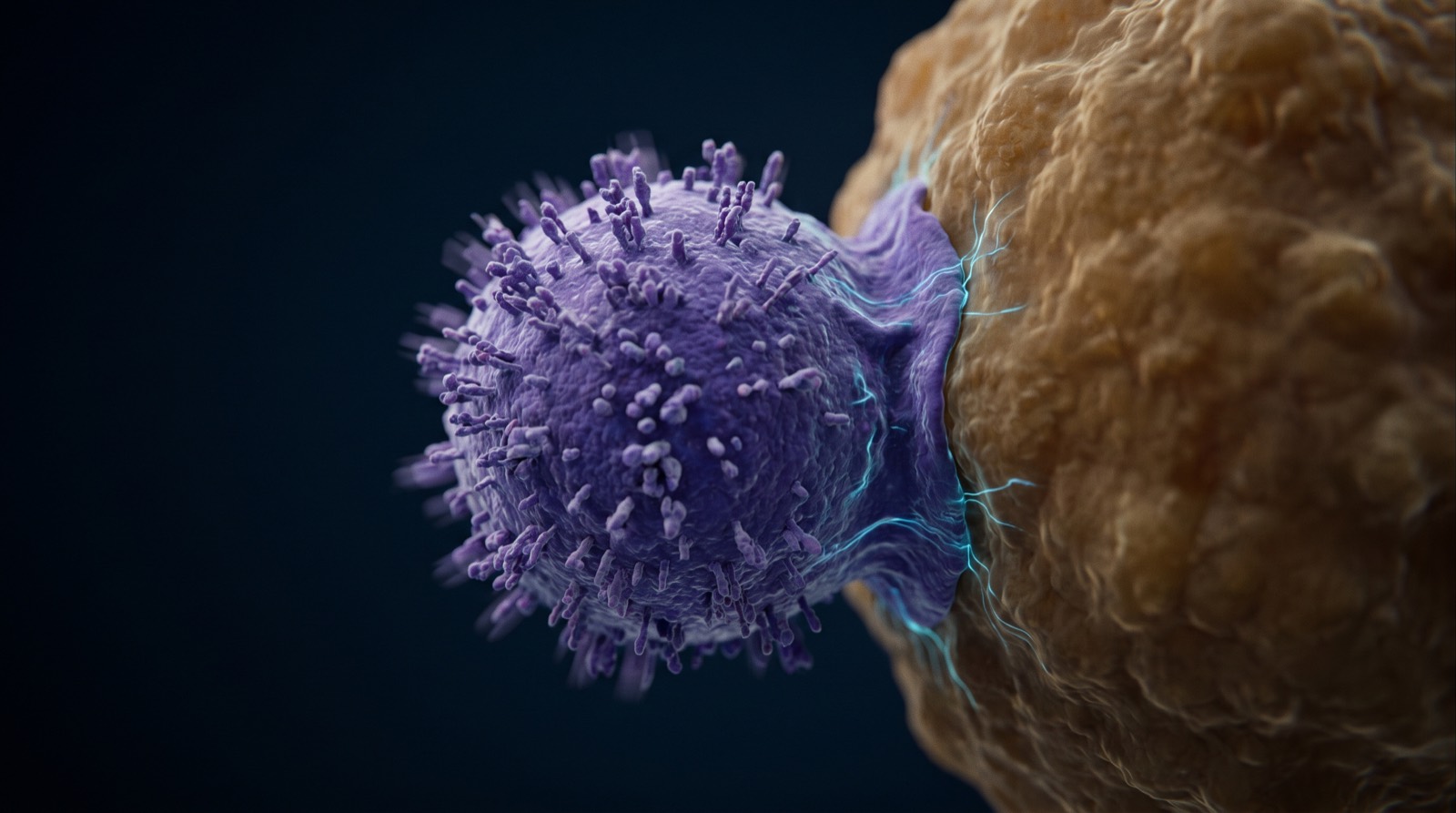
An engineered immune cell engaging a tumour cell. Illustration generated for The CRISPR Atlas — a visual aid, not a photograph or a literal depiction of molecular structure.

Honest status

Approved CAR-T therapies exist and have changed outcomes in several blood cancers — but the approved ones are made with viral gene addition, not gene editing. Editing-based products are in trials. Solid tumours remain far harder than blood cancers for every cell therapy, edited or not.

ImportantNo gene-editing cancer therapy has been approved. Coverage that describes CRISPR as a cancer treatment is describing research.

Sources

Connected in the Atlas

Every entry on this site is linked to the others it relates to. These connections are part of the record, not a search result.

Actualités liées à cette page

Associé automatiquement à ce dossier. Chaque élément renvoie à son éditeur.

Information éducative uniquement Cette page est une ressource de référence, et non un conseil médical. L'état de la recherche et des autorisations réglementaires évolue ; vérifiez la date de dernière mise à jour ci-dessus et confirmez tout élément important auprès des sources primaires indiquées.