La guida definitiva all'editing genico.
Menu
Home Scopri Notizie Chiedi all'Atlas
Esplora Tecnologie Malattie Trattamenti Sperimentazioni cliniche Aziende Scienziati Geni Ricerca Istituzioni
Oltre la medicina Agricoltura Etica Investimenti Mappa del mondo
Scopri e strumenti Inizia da qui Glossario A–Z Confronta le tecnologie Cronologia Elenchi e classifiche Agenti IA ★ Salvato API
Informazioni Chi siamo Metodologia Fonti dei dati Politica editoriale Contatti Note legali

🧭 Vista guidata
Sei nuovo alla genetica? Spieghiamo ogni termine mentre navighi, in parole semplici. Le stesse pagine, con il supporto già incluso.

⚡ Parere degli esperti
Conosci già la biologia. Solo i contenuti — chiari e compatti, senza spiegazioni aggiuntive. Questa è la visualizzazione predefinita.

Lingua dell'interfaccia
Modalità chiara

Technology · Earlier generation

Zinc Finger Nucleases

The first programmable gene-editing tool to reach patients — small, engineered proteins that grip DNA in three-letter blocks.

Phase III DNAcuts DNAprotein-guidedcompact
Clinical research Being tested in people in registered clinical trials. Being in trials is not evidence that a treatment works or is safe.

Spiegazione semplice

The original. Zinc fingers are small protein modules, each gripping about three letters of DNA, that can be chained together to recognise a longer sequence and joined to a cutting enzyme. They are difficult to design and they got there first: the earliest human gene-editing trials, more than a decade before CRISPR reached a patient, used zinc finger nucleases.

Approfondisci

Zinc finger nucleases fuse arrays of Cys2-His2 zinc finger domains — each contacting roughly three base pairs — to the FokI nuclease domain, used in pairs. Their compact size is a genuine advantage for AAV delivery. Their weakness is design: context-dependent binding between adjacent fingers makes engineering an array for a chosen sequence difficult, which is precisely the problem CRISPR made irrelevant.

Historical importance

ZFNs carried gene editing into humans. Sangamo's SB-728-T programme disrupted CCR5 in T cells of people with HIV from 2009, establishing that a targeted, permanent edit could be made in a patient's cells and administered safely enough to continue. Every subsequent editing programme was built on regulatory ground that work broke.

They remain in clinical development, particularly where compact size aids delivery.

Historical importance
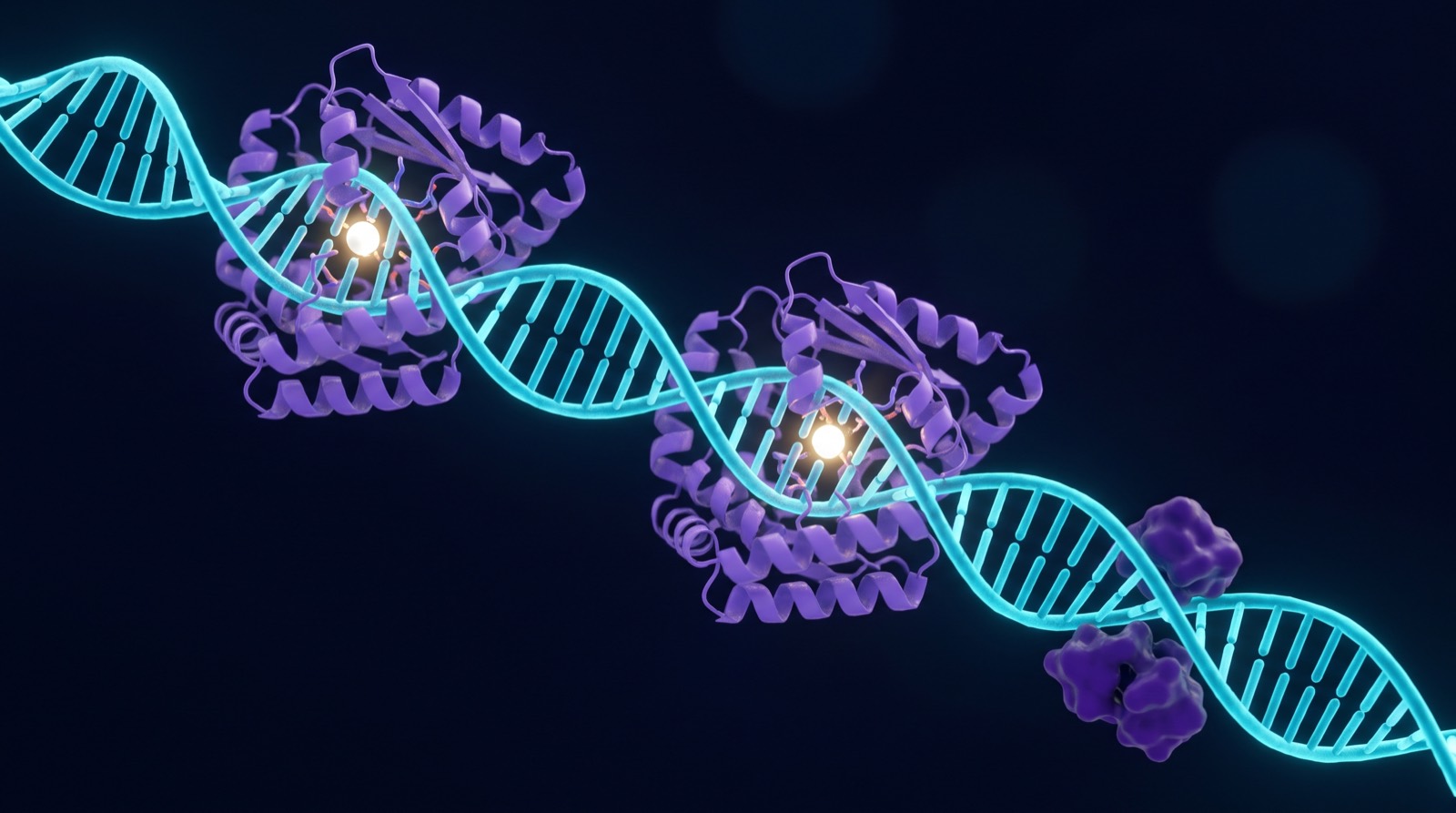
Zinc finger domains, each cradling a metal ion, reading DNA in blocks. Illustration generated for The CRISPR Atlas — a visual aid, not a photograph or a literal depiction of molecular structure.

Sources

Connected in the Atlas

Every entry on this site is linked to the others it relates to. These connections are part of the record, not a search result.

Solo informazioni educative Questa pagina è una risorsa di riferimento, non una consulenza medica. Lo stato della ricerca e delle autorizzazioni regolatorie cambia; controlla la data dell'ultimo aggiornamento in alto e verifica le informazioni importanti nelle fonti primarie elencate.