Sade açıklama
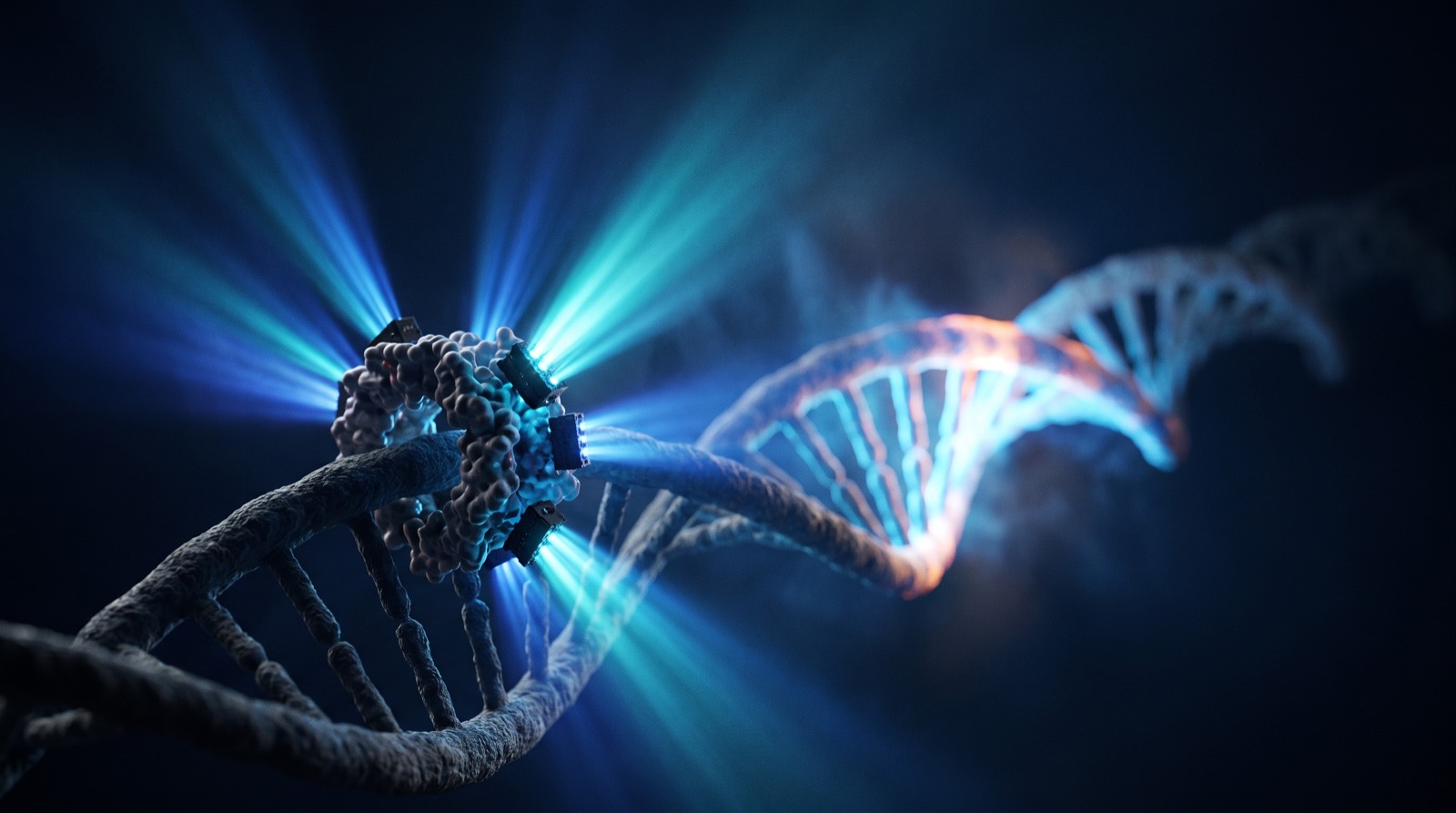
Take the CRISPR protein, break its cutting ability, and bolt on a molecular megaphone. It still finds the exact spot you aim it at, but instead of cutting it shouts, telling the cell to make far more of that gene's protein than it otherwise would.
Daha derine in
CRISPR activation uses catalytically dead Cas9 (dCas9) fused to transcriptional activator domains such as VP64, p65 and HSF1, or to the SunTag and SAM amplification architectures, targeted to a promoter region to increase transcription of the endogenous gene. Because the endogenous locus is used, normal regulation and splicing are preserved, unlike delivering a cDNA copy.
What it is used for
Overwhelmingly a research tool: genome-wide activation screens that ask which genes, when turned up, produce a phenotype of interest. Therapeutically it is attractive for haploinsufficiency, conditions where one working copy of a gene is not enough, because turning up the remaining copy is conceptually simpler than replacing the broken one.
Sources
- Nature (Konermann et al.) · 2015
Genome-scale transcriptional activation by an engineered CRISPR-Cas9 complex ↗
