Le guide de référence sur l'édition génomique.
Menu
Accueil Apprendre Actualités Demandez à l'Atlas
Explorer Technologies Maladies Traitements Essais cliniques Entreprises Scientifiques Gènes Recherche Institutions
Au-delà de la médecine Agriculture Éthique Investissement Carte du monde
Apprendre & Outils Commencer ici Glossaire A–Z Comparer les technologies Chronologie Listes & Classements Agents IA ★ Enregistré API
À propos À propos de nous Méthodologie Sources de données Politique éditoriale Contact Avertissements

🧭 Vue guidée
Nouveau en génétique ? Nous expliquons chaque terme au fil de votre navigation, en langage clair. Les mêmes pages, avec l'aide intégrée.

⚡ Point de vue d'expert
Vous connaissez déjà la biologie. Uniquement le contenu — clair et concis, sans explications supplémentaires. C'est l'affichage par défaut.

Langue de l'interface
Mode clair

Scientist · Biochemistry

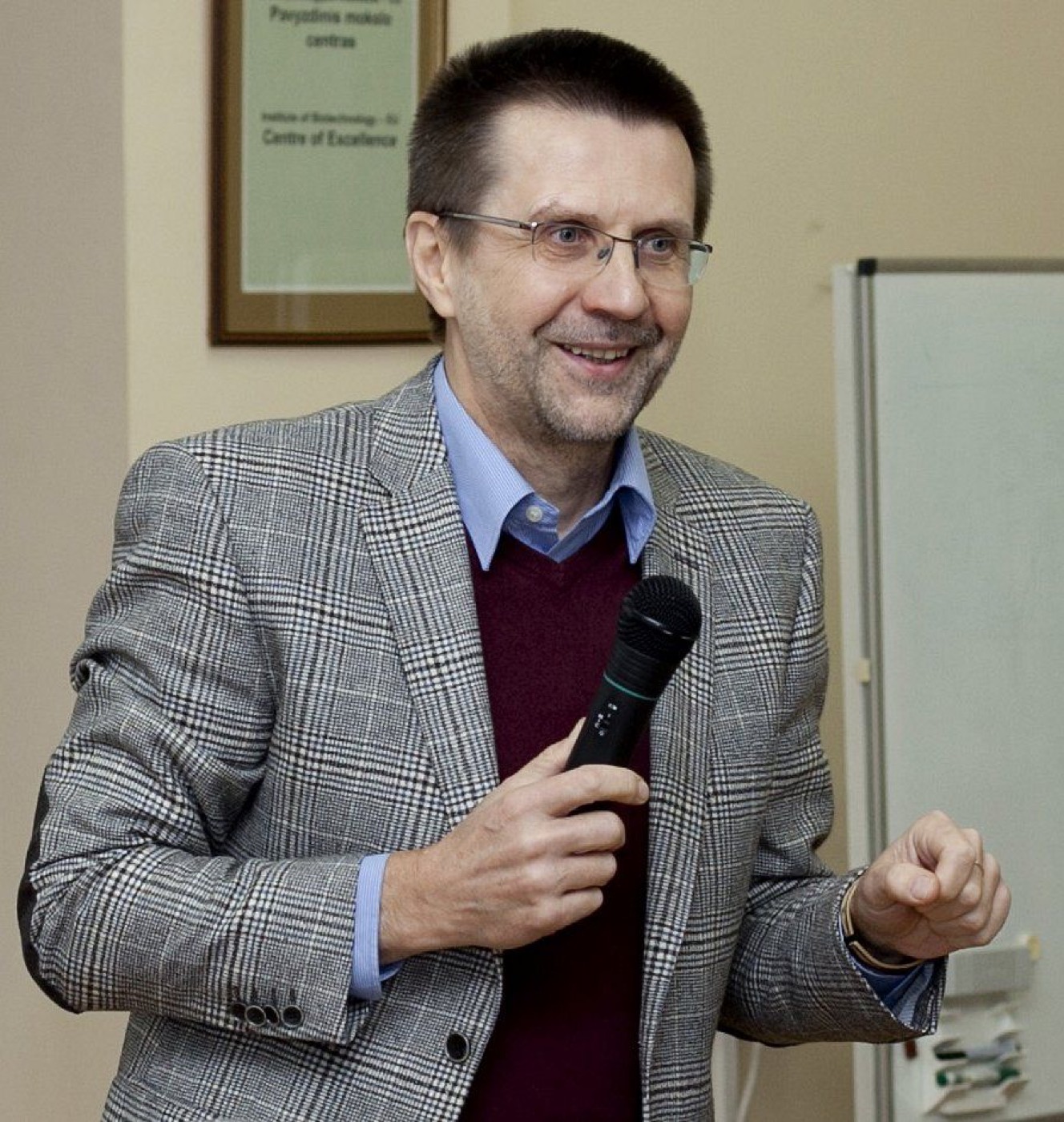
Virginijus Šikšnys

Lithuanian biochemist who independently showed that Cas9 could be programmed to cut DNA, publishing in 2012 — and whose contribution is often omitted from popular accounts.

CRISPR-Cas9priority

Explication simple

Working in Vilnius, Virginijus Šikšnys showed independently that the CRISPR-Cas9 system could be transferred between bacteria and programmed to cut chosen DNA. He submitted his paper before the Doudna–Charpentier paper was published; it appeared later after a slower review process at a different journal. He shared the 2018 Kavli Prize with Doudna and Charpentier, but is frequently left out of the story as it is usually told.

Aller plus loin

Virginijus Šikšnys is Professor at the Institute of Biotechnology, Vilnius University. His group demonstrated that the Streptococcus thermophilus CRISPR-Cas9 system could be transferred to E. coli and reprogrammed to cleave chosen DNA sequences, published in PNAS in 2012. He shared the 2018 Kavli Prize in Nanoscience with Doudna and Charpentier. His case is a useful corrective to how scientific narratives compress: publication order is partly a function of editorial process, not only of discovery.

Sources

Connected in the Atlas

Every entry on this site is linked to the others it relates to. These connections are part of the record, not a search result.

Technologies

CRISPR-Cas9
Information éducative uniquement Cette page est une ressource de référence, et non un conseil médical. L'état de la recherche et des autorisations réglementaires évolue ; vérifiez la date de dernière mise à jour ci-dessus et confirmez tout élément important auprès des sources primaires indiquées.