Giải thích đơn giản
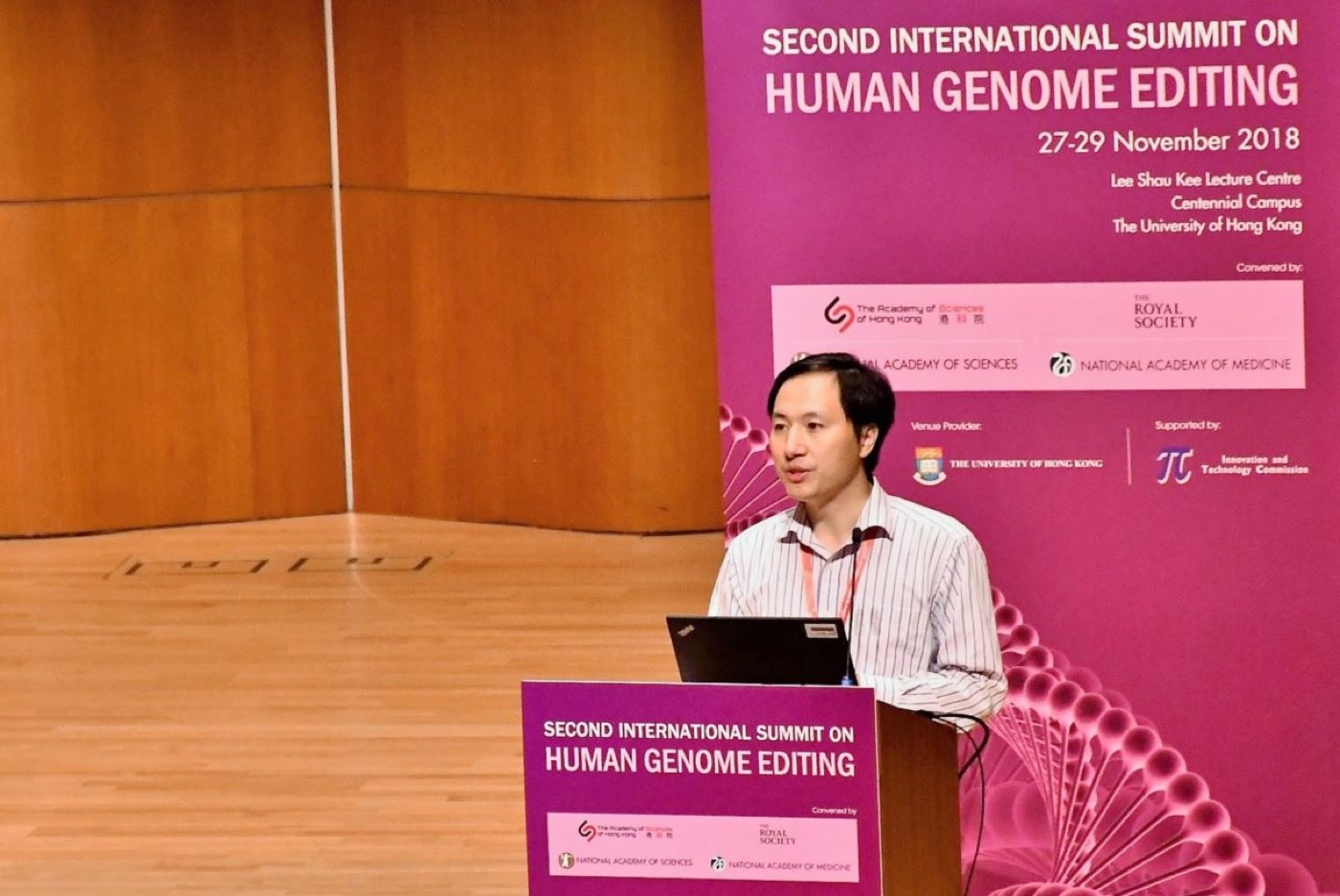
In November 2018 He Jiankui announced that he had edited the CCR5 gene in human embryos and that twin girls had been born from them. The stated aim was resistance to HIV, a condition that is preventable and treatable by other means. The work was condemned across the scientific world for its secrecy, its inadequate consent process, its unnecessary risk to healthy children, and the fact that the edits are heritable. He was convicted in China and imprisoned for three years.
Tìm hiểu sâu hơn
He Jiankui, then at the Southern University of Science and Technology in Shenzhen, announced in November 2018 the birth of twins from embryos in which CCR5 had been edited using CRISPR-Cas9, with a third child born later. The work was widely condemned: the medical justification was absent, the consent process was found to be deficient, editing was mosaic and did not reproduce the protective CCR5-Δ32 variant, and the changes are heritable. He was convicted of illegal medical practice and sentenced to three years in prison, released in 2022. The episode prompted the WHO expert advisory committee on human genome editing and a strengthening of germline prohibitions in many jurisdictions.
Why this record exists here
It would be simpler to leave this out. It is included because the episode is the single most consequential event in the field's governance history, because it is routinely misdescribed, and because leaving it out would make this site's ethics coverage dishonest. The children involved are private individuals and this record contains nothing identifying about them.
Sources
- World Health Organization · 2021
WHO issues new recommendations on human genome editing ↗