La guía definitiva sobre edición genética.
Menú
Inicio Aprender Noticias Pregunta al Atlas
Explorar Tecnologías Enfermedades Tratamientos Ensayos clínicos Empresas Científicos Genes Investigación Instituciones
Más allá de la medicina Agricultura Ética Inversión Mapa mundial
Aprender y herramientas Empieza aquí Glosario A–Z Comparar tecnologías Cronología Listas y rankings Agentes de IA ★ Guardado API
Acerca de Quiénes somos Metodología Fuentes de datos Política editorial Contacto Avisos legales

🧭 Vista guiada
¿Eres nuevo en genética? Explicamos cada término mientras navegas, en un lenguaje sencillo. Las mismas páginas, con la ayuda incorporada.

⚡ Opinión experta
Ya conoces la biología. Solo el contenido — limpio y compacto, sin explicaciones adicionales. Esta es la vista predeterminada.

Idioma de la interfaz
Modo claro

Start here · 3 min de lectura

What is a genome?

A genome is the complete set of genetic instructions in an organism — every chromosome, every gene, and everything in between.

La respuesta breve

Your genome is all of your DNA taken together: all 46 chromosomes, all your genes, and all the DNA between them. Reading one out — sequencing it — took thirteen years and billions of dollars the first time. It now takes about a day and a few hundred dollars, and that collapse in cost is a large part of why gene editing became possible at all.

The genome is the complete set of nucleic acid sequence in an organism, including nuclear chromosomes and mitochondrial DNA. The Human Genome Project produced a draft in 2001 and a complete sequence in 2003, with the remaining hard-to-sequence regions filled in by the Telomere-to-Telomere consortium in 2022. Sequencing cost has fallen by roughly six orders of magnitude since.

Why cheap sequencing made editing possible

Editing without sequencing would be nearly useless. You need to know the target's exact sequence to design a guide; you need to sequence afterwards to confirm the intended edit happened; and you need deep sequencing across many sites to check that nothing unintended happened. The ability to read the genome cheaply is what makes writing to it verifiable.
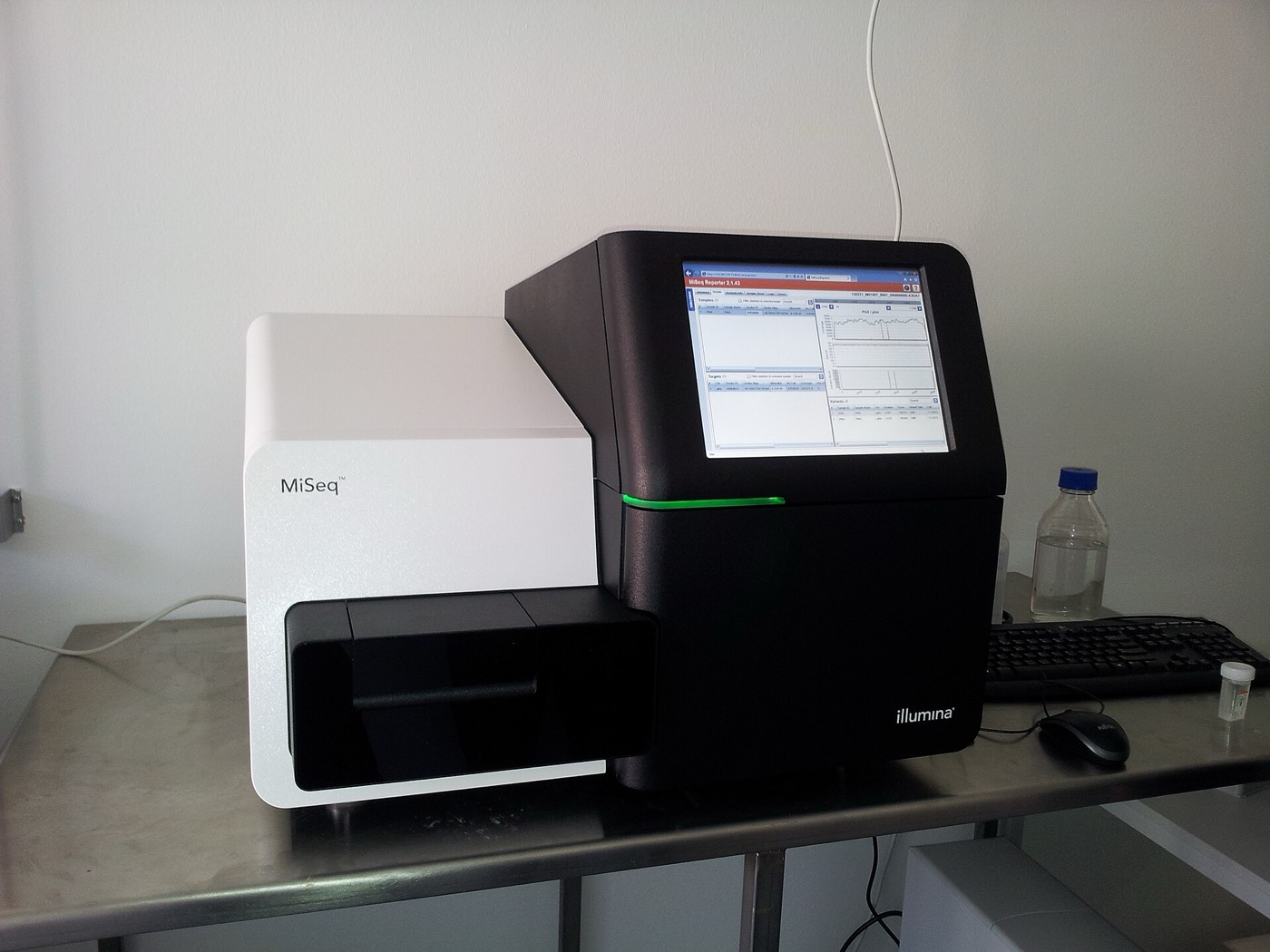
A sequencing instrument reading millions of short fragments at once; software reassembles them into a genome.
A sequencing instrument reading millions of short fragments at once; software reassembles them into a genome. Illustration generated for The CRISPR Atlas.

Sources

Connected in the Atlas

Every entry on this site is linked to the others it relates to. These connections are part of the record, not a search result.