La guía definitiva sobre edición genética.
Menú
Inicio Aprender Noticias Pregunta al Atlas
Explorar Tecnologías Enfermedades Tratamientos Ensayos clínicos Empresas Científicos Genes Investigación Instituciones
Más allá de la medicina Agricultura Ética Inversión Mapa mundial
Aprender y herramientas Empieza aquí Glosario A–Z Comparar tecnologías Cronología Listas y rankings Agentes de IA ★ Guardado API
Acerca de Quiénes somos Metodología Fuentes de datos Política editorial Contacto Avisos legales

🧭 Vista guiada
¿Eres nuevo en genética? Explicamos cada término mientras navegas, en un lenguaje sencillo. Las mismas páginas, con la ayuda incorporada.

⚡ Opinión experta
Ya conoces la biología. Solo el contenido — limpio y compacto, sin explicaciones adicionales. Esta es la vista predeterminada.

Idioma de la interfaz
Modo claro

Intermediate · 6 min de lectura

Delivery: the real bottleneck

Getting the editing machinery into the right cells, in enough of them, without harm — the problem that decides which diseases are treatable.

La respuesta breve

People imagine the hard part of gene editing is the editing. It is not. The hard part is getting the machinery into the right cells inside a living body. We can reach the liver reliably, the eye and blood cells with more effort, and muscle, brain and lung barely at all. Almost every disease that looks 'nearly solved' but never arrives is stuck on this.

Delivery determines tissue tropism, dose, immunogenicity and duration of editor exposure. Lipid nanoparticles achieve efficient hepatocyte delivery and are transient, favouring safety. AAV offers broad tropism with engineered capsids but has a ~4.7 kb packaging limit, provokes pre-existing and induced immunity, and causes dose-dependent hepatotoxicity that has been fatal at high systemic doses. Ex vivo electroporation of ribonucleoprotein avoids systemic exposure entirely but requires conditioning and cell manufacturing.

Getting the editor into a cell — the hard part AAV virus a hollowed-out virus · small cargo limit · long-lasting · immunity can block re-dosing Lipid nanoparticle a fat bubble · no size limit in practice · clears in days · naturally goes to the liver Electroporation an electric pulse · lab use, cells outside body · very efficient · only works ex vivo
Delivery, not the editing chemistry, is what decides which organs are reachable today. This is why liver diseases moved first.

What each route can and cannot reach

RouteReachesMain limitation
Lipid nanoparticleLiver, very efficientlyLittle else, without targeting innovations
AAVEye, liver, some muscle and central nervous systemSize limit; immunity; toxicity at high doses
Ex vivo electroporationBlood and immune cellsRequires conditioning chemotherapy and manufacturing
Inhaled deliveryAirway, in principleMucus and epithelial defences; largely preclinical
Direct injectionEye, some local tissueOnly where a needle can go

This table is effectively a map of which diseases have clinical programmes and which do not.
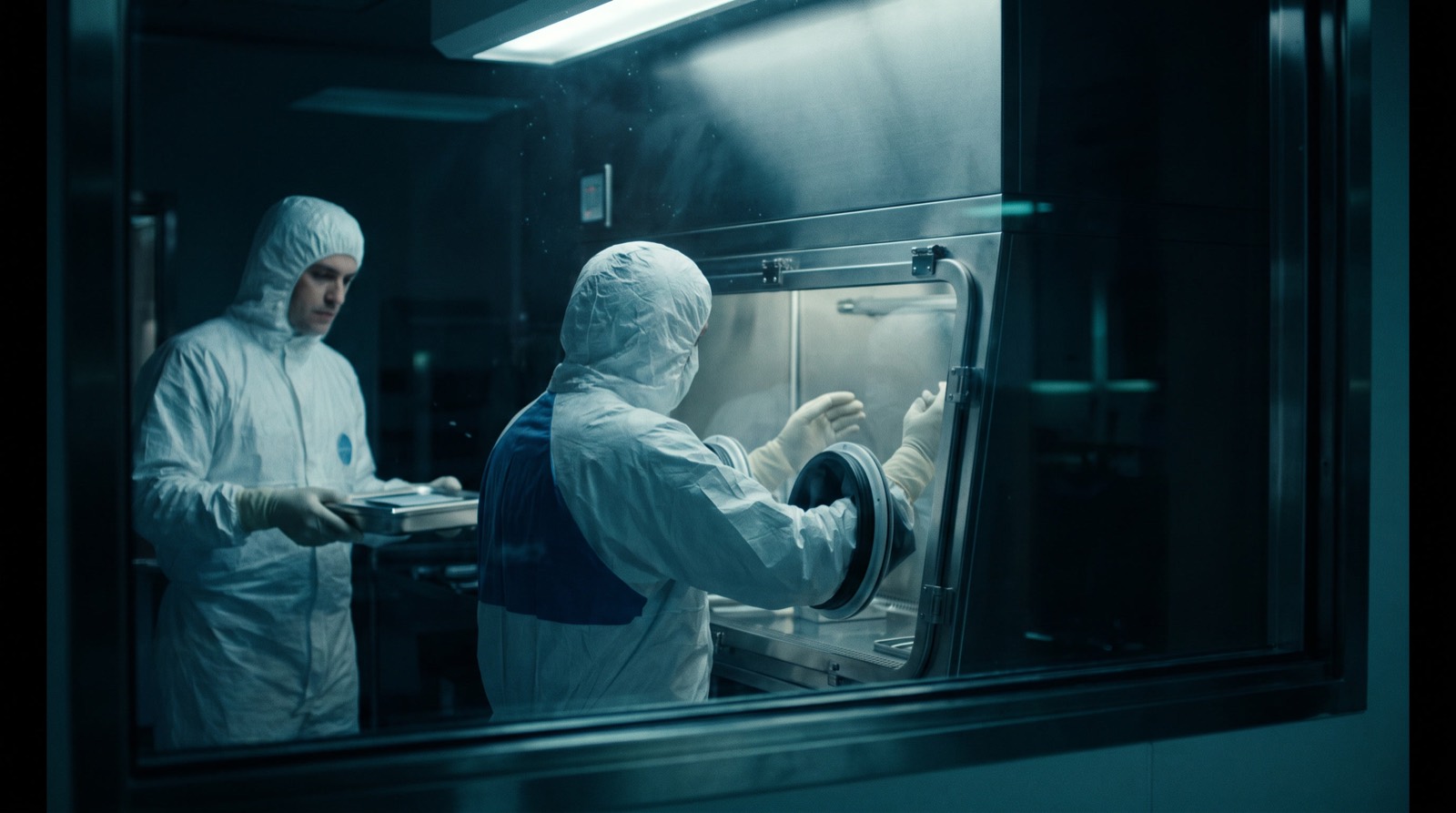
Manufacturing under sterile conditions is a large part of why these treatments cost what they do.
Manufacturing under sterile conditions is a large part of why these treatments cost what they do. Illustration generated for The CRISPR Atlas.

Sources

Connected in the Atlas

Every entry on this site is linked to the others it relates to. These connections are part of the record, not a search result.