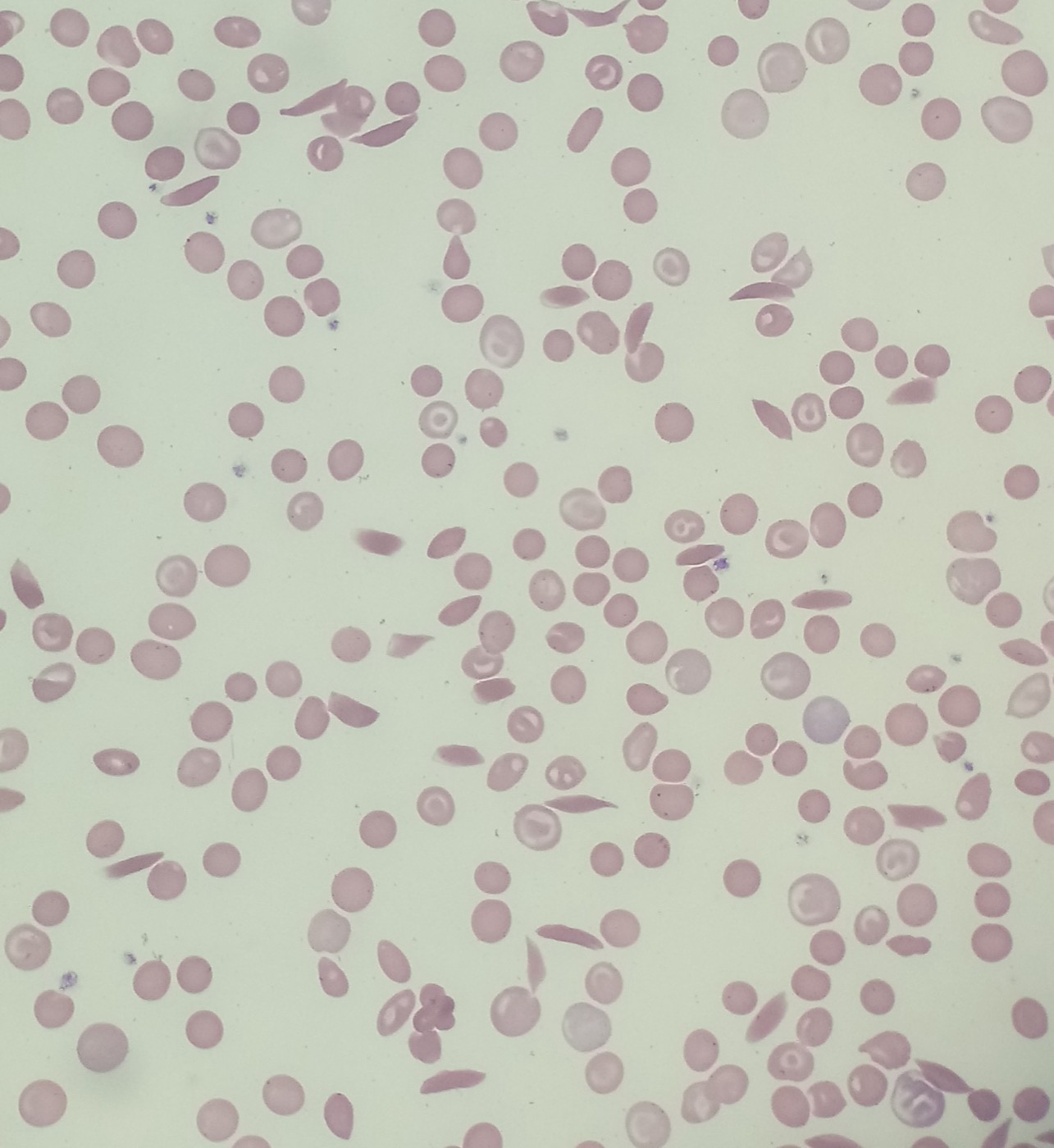
Penjelasan sederhana
Red blood cells are normally soft discs that squeeze through the narrowest vessels. In sickle cell disease one letter of the haemoglobin gene is changed, and under low oxygen the haemoglobin inside the cell crystallises, forcing the cell into a rigid crescent. Those crescents jam in small blood vessels, which causes sudden severe pain, organ damage over the years, and a shortened life. In 2023 it became the first condition anywhere to have a CRISPR-based medicine approved.
Pelajari lebih dalam
Sickle cell disease is caused by homozygosity for the HBB p.Glu6Val (rs334) variant, producing haemoglobin S which polymerises on deoxygenation. The resulting sickled erythrocytes drive vaso-occlusion, chronic haemolytic anaemia, and progressive damage to spleen, kidneys, lungs and brain. The dominant editing strategy does not correct the mutation: it disrupts the erythroid-specific enhancer of BCL11A, the repressor that silences fetal haemoglobin after birth, thereby reactivating HbF, which does not sickle.
How common it is
Sickle cell disease affects an estimated 20 million people worldwide. Roughly 100,000 people in the United States have it, and it is most common in people of sub-Saharan African, Middle Eastern, Indian and Mediterranean ancestry. The single-copy carrier state, sickle cell trait, offers partial protection against severe malaria, which is why the variant reached high frequency in malaria-endemic regions, one of the most clearly documented examples of natural selection in humans.
About 75 per cent of babies born with sickle cell disease each year are born in sub-Saharan Africa. That fact sits uncomfortably beside a treatment costing millions of dollars and requiring a transplant unit, and it is the central access problem in this field.
How gene editing is being used
The approved approach is indirect and rather elegant. Rather than repairing the sickle mutation, it reactivates a gene everyone is born with. Fetal haemoglobin, which carries oxygen before birth, does not sickle; a gene called BCL11A switches it off in infancy. Disrupting the enhancer that drives BCL11A in red blood cell precursors lets fetal haemoglobin come back, and people who naturally retain high fetal haemoglobin have long been known to have far milder disease. The genetics told everyone where to aim decades before the tools existed.
Base-editing approaches take a related route, installing a variant that recreates hereditary persistence of fetal haemoglobin. Approaches that correct the HBB mutation directly are in earlier development.
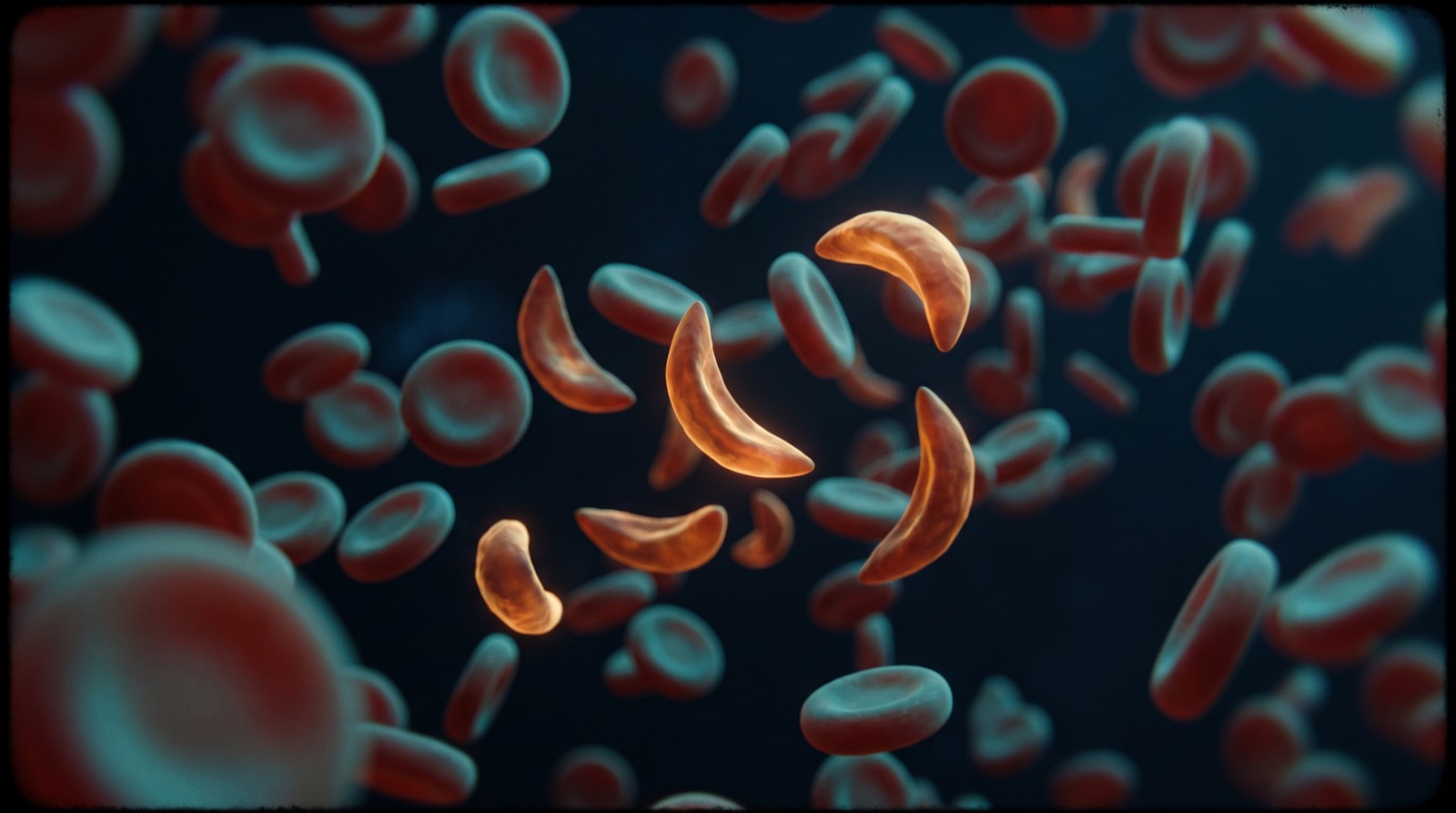
What the treatment actually involves
This is not an injection. Blood stem cells are collected from the patient over several rounds of mobilisation and apheresis, edited in a manufacturing facility, and stored while the patient receives busulfan conditioning, chemotherapy that clears the bone marrow to make room. The edited cells are then infused, and the patient spends weeks in hospital while the marrow recovers.
The conditioning carries real harm: infertility is a common consequence, infection risk during the aplastic period is serious, and the long-term risk of secondary malignancy is not yet fully characterised. For a person with severe disease that trade may be clearly worth making. It is a genuine trade nonetheless, and it is why the approved therapy is indicated for severe disease rather than for everyone with the condition.
Current standard of care
Hydroxyurea, which raises fetal haemoglobin pharmacologically, remains the foundation of treatment and is inexpensive and widely available. Transfusion programmes, L-glutamine, voxelotor and crizanlizumab are used in various settings, though voxelotor was withdrawn from markets worldwide in 2024 after post-marketing data. Allogeneic bone marrow transplant from a matched sibling donor has for decades given long-term disease-free survival to about nine in ten recipients, but most patients have no matched donor, which is precisely the gap that autologous edited cells fill.
Major challenges
Common questions
Is there a permanent treatment for sickle cell disease?
An approved CRISPR-based therapy, Casgevy, produced sustained freedom from severe pain crises in the large majority of trial participants, and allogeneic transplant from a matched sibling donor has given long-term disease-free survival to about nine in ten recipients for decades, though only a minority of patients have such a donor. Whether either benefit lasts a lifetime is not yet known: follow-up for the edited-cell therapy is measured in a few years. Editorially, this site describes the measured outcome rather than making a lifetime claim.
Who can get Casgevy?
It is authorised for people aged 12 and over with severe disease, defined by recurrent vaso-occlusive crises, and eligibility in practice also depends on fitness for conditioning chemotherapy and access to a qualified treatment centre. Only a treating physician can assess an individual.
Why edit BCL11A instead of fixing the sickle mutation?
Because it works with a single, well-tolerated knockout edit rather than a precise correction, which was far harder with the tools available. Disrupting the BCL11A enhancer switches fetal haemoglobin back on, and fetal haemoglobin does not sickle.
Sources
- Blood (Gluckman et al.) · 2017
Sickle cell disease: an international survey of results of HLA-identical sibling hematopoietic stem cell transplantation ↗ - U.S. Food and Drug Administration · 2023
FDA approves first gene therapies to treat patients with sickle cell disease ↗ - New England Journal of Medicine (Frangoul et al.) · 2024
Exagamglogene autotemcel for severe sickle cell disease ↗ - World Health Organization
Sickle cell disease ↗
