Gen düzenlemenin kapsamlı rehberi.
Menü
Ana Sayfa Öğren Haberler Atlas'a Sor
Keşfet Teknolojiler Hastalıklar Tedaviler Klinik Araştırmalar Şirketler Bilim insanları Genler Araştırma Kurumlar
Tıbbın ötesinde Tarım Etik Yatırım Dünya haritası
Öğren ve Araçlar Buradan başlayın Sözlük A–Z Teknolojileri karşılaştır Zaman çizelgesi Listeler ve Sıralamalar Yapay Zeka Ajanları ★ Kaydedildi API
Hakkında Hakkımızda Yöntem Veri Kaynakları Yayın Politikası İletişim Yasal Uyarılar

🧭 Rehberli Görünüm
Genetiğe yeni misiniz? Gezinirken her terimi sade bir dille açıklıyoruz. Aynı sayfalar, yardım da dahil.

⚡ Uzman Görüşü
Biyolojiyi zaten biliyorsunuz. Sadece içerik — sade ve özlü, fazladan açıklama yok. Bu varsayılan görünümdür.

Arayüz dili
Açık mod

Disease · Neurological disease

Huntington's Disease

A fatal inherited brain disease caused by a toxic protein — where the genetics are unusually clear and the delivery problem is unusually hard.

Preclinical braindelivery problemHTT
Preclinical research Tested in cells and animals only. Most preclinical programmes never reach people, and animal results often do not carry over.

Sade açıklama

A repeated stretch of DNA in one gene becomes too long, and the protein it makes gains a new, harmful property that slowly kills brain cells controlling movement, thinking and mood. The genetics could not be clearer: inherit the expansion and you will develop the disease. What is not clear is how to get an editing machine into billions of neurons, spread throughout the brain, behind a barrier evolved specifically to keep things out.

Daha derine in

Huntington's disease is caused by CAG repeat expansion in HTT, producing mutant huntingtin with a toxic gain of function; it is autosomal dominant with essentially complete penetrance above about 40 repeats. Because the pathology is gain-of-function, silencing or removing the mutant allele is the therapeutic goal — ideally allele-selectively, since wild-type huntingtin has essential functions. Delivery across the blood-brain barrier to sufficient neurons remains unsolved, and the fact that neurons do not divide means homology-directed repair is unavailable.

Two hard problems, not one

Delivery is the obvious one. The less obvious one is selectivity: everyone with Huntington's has one normal copy of the gene and one expanded copy, and the normal copy does something important. A treatment that silences both may create a new problem while solving the old one, so allele-selective approaches — targeting variants that happen to sit on the expanded copy — are an active area.

Non-editing approaches to lowering huntingtin have had a difficult clinical history, which has made the whole field appropriately cautious about this target.
Two hard problems, not one
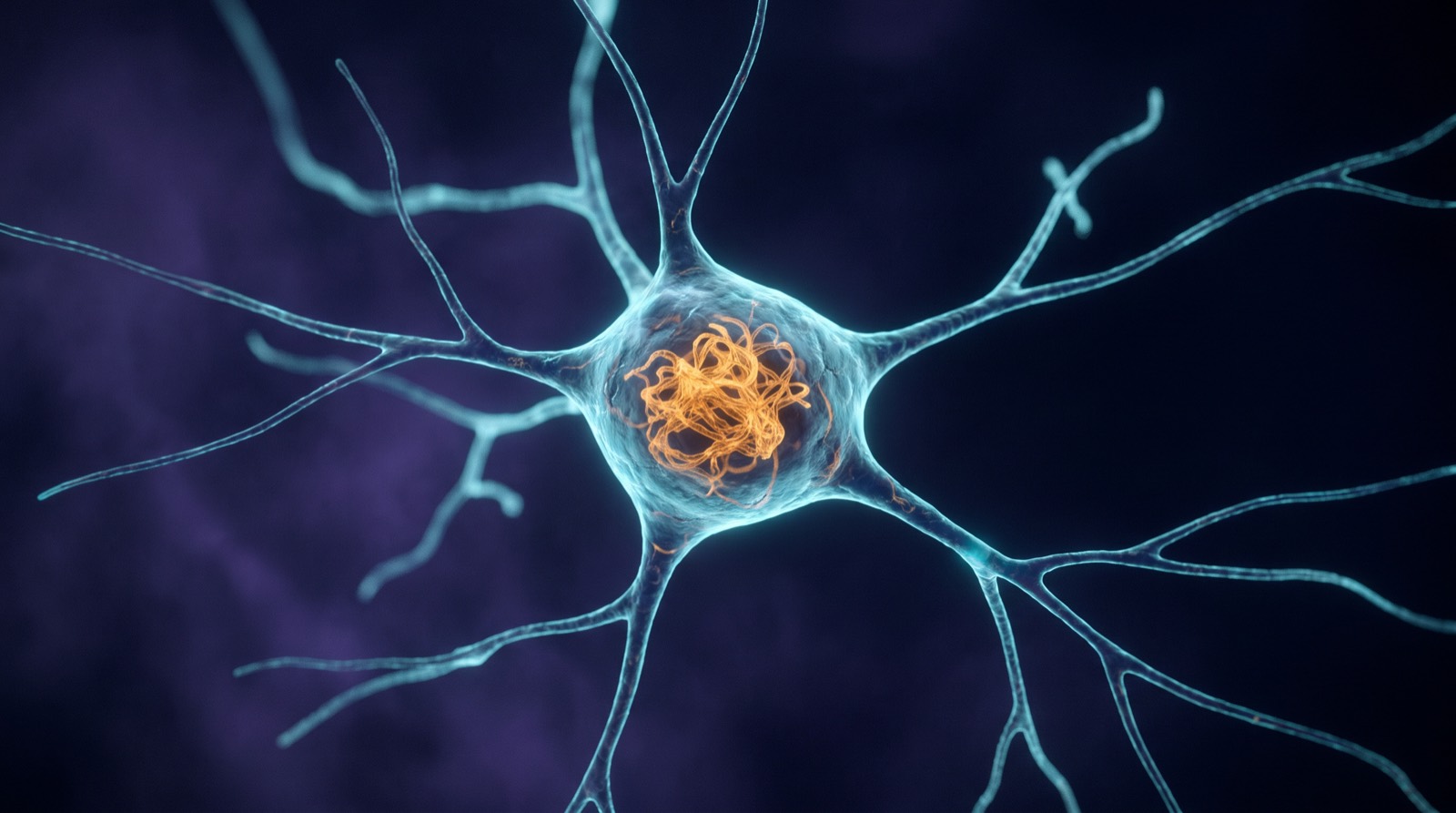
A neuron with an aggregate of misfolded protein in its cell body. Illustration generated for The CRISPR Atlas — a visual aid, not a photograph or a literal depiction of molecular structure.

Sources

Connected in the Atlas

Every entry on this site is linked to the others it relates to. These connections are part of the record, not a search result.

Technologies

CRISPR-Cas13

Genes

HTT
Yalnızca eğitim amaçlı bilgi Bu sayfa bir referans kaynağıdır, tıbbi tavsiye değildir. Araştırma ve düzenleyici onay durumları değişebilir; yukarıdaki son güncelleme tarihini kontrol edin ve önemli bilgileri listelenen birincil kaynaklardan doğrulayın.