La guía definitiva sobre edición genética.
Menú
Inicio Aprender Noticias Pregunta al Atlas
Explorar Tecnologías Enfermedades Tratamientos Ensayos clínicos Empresas Científicos Genes Investigación Instituciones
Más allá de la medicina Agricultura Ética Inversión Mapa mundial
Aprender y herramientas Empieza aquí Glosario A–Z Comparar tecnologías Cronología Listas y rankings Agentes de IA ★ Guardado API
Acerca de Quiénes somos Metodología Fuentes de datos Política editorial Contacto Avisos legales

🧭 Vista guiada
¿Eres nuevo en genética? Explicamos cada término mientras navegas, en un lenguaje sencillo. Las mismas páginas, con la ayuda incorporada.

⚡ Opinión experta
Ya conoces la biología. Solo el contenido — limpio y compacto, sin explicaciones adicionales. Esta es la vista predeterminada.

Idioma de la interfaz
Modo claro

Disease · Blood disorders

Hemophilia

An inherited bleeding disorder in which gene addition reached approval first, leaving editing to solve the problem of durability.

Preclinical liverclottingF8F9
Preclinical research Tested in cells and animals only. Most preclinical programmes never reach people, and animal results often do not carry over.

Explicación sencilla

Blood clotting works as a chain of proteins, each activating the next. In haemophilia one link is missing, so clots form too slowly and bleeding continues — into joints and muscles, and sometimes dangerously. Approved gene therapies already put a working copy of the missing gene into liver cells. The reason to try editing instead is that added copies can fade over time, particularly in children whose livers are still growing, while an edit at the gene's own address should last.

Profundizar

Haemophilia A and B result from F8 and F9 mutations respectively, both X-linked. Approved AAV gene-addition therapies deliver functional transgenes to hepatocytes and have produced substantial factor expression, but episomal AAV genomes dilute with hepatocyte turnover — a particular limitation in paediatric patients — and pre-existing anti-AAV immunity excludes a significant fraction of patients. Targeted integration at a safe-harbour locus such as albumin, or in situ correction, aims for durability that survives cell division.

The durability argument

This is the clearest case where editing's advantage over gene addition is about time rather than capability. An AAV episome is not copied when a cell divides, so as the liver renews itself the therapeutic copies are diluted away. Integrating the sequence, or editing the endogenous gene, means every daughter cell inherits it. For a child who will live another seventy years, that difference is the whole argument.

The durability argument
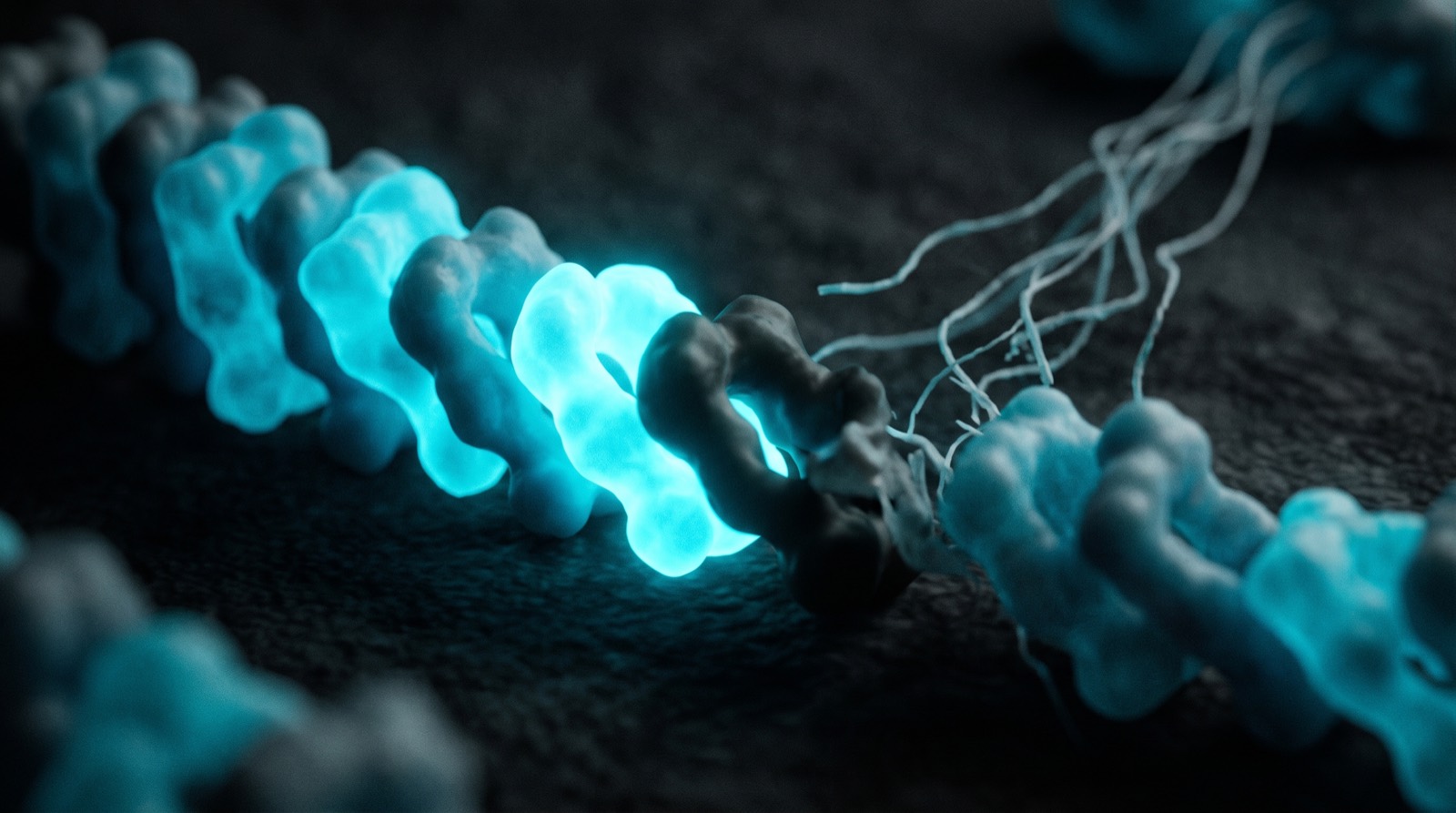
A clotting cascade with one link missing and the chain failing. Illustration generated for The CRISPR Atlas — a visual aid, not a photograph or a literal depiction of molecular structure.

Sources

Connected in the Atlas

Every entry on this site is linked to the others it relates to. These connections are part of the record, not a search result.

Solo información educativa Esta página es una referencia, no asesoramiento médico. El estado de la investigación y la situación regulatoria cambian; comprueba la fecha de última actualización que aparece arriba y confirma cualquier dato importante con las fuentes primarias indicadas.