Hướng dẫn toàn diện về chỉnh sửa gene.
Menu
Trang chủ Tìm hiểu Tin tức Hỏi Atlas
Khám phá Các công nghệ Các bệnh Các phương pháp điều trị Thử nghiệm lâm sàng Các công ty Các nhà khoa học Các gene Nghiên cứu Tổ chức / Cơ sở
Ngoài y học Nông nghiệp Đạo đức Đầu tư Bản đồ thế giới
Tìm hiểu & Công cụ Bắt đầu tại đây Bảng thuật ngữ A–Z So sánh các công nghệ Dòng thời gian Danh sách & Xếp hạng AI Agents ★ Đã lưu API
Giới thiệu Về chúng tôi Phương pháp Nguồn dữ liệu Chính sách biên tập Liên hệ Tuyên bố miễn trừ trách nhiệm

🧭 Chế độ xem có hướng dẫn
Mới làm quen với di truyền học? Chúng tôi giải thích mọi thuật ngữ ngay khi bạn duyệt, bằng ngôn ngữ dễ hiểu. Cùng nội dung đó, nhưng có phần hỗ trợ tích hợp sẵn.

⚡ Góc nhìn chuyên gia
Bạn đã hiểu về sinh học rồi. Chỉ cần nội dung — gọn gàng và súc tích, không có giải thích thêm. Đây là chế độ xem mặc định.

Ngôn ngữ giao diện
Chế độ sáng

Disease · Rare genetic disease

Cystic Fibrosis

A disease of thick mucus in the lungs and gut where highly effective drugs already exist for most patients — leaving editing to address the minority they do not help.

Preclinical lungdelivery problemCFTR
Preclinical research Tested in cells and animals only. Most preclinical programmes never reach people, and animal results often do not carry over.

Giải thích đơn giản

A faulty channel protein stops salt and water moving properly across cell surfaces, so mucus becomes thick and sticky, clogging the lungs and the pancreas. Cystic fibrosis is unusual on this site because the drug treatments that arrived in the last decade are genuinely transformative for most patients. The remaining problem is the minority whose particular mutations those drugs cannot help — and reaching the airway surface, which turns out to be very good at keeping things out.

Tìm hiểu sâu hơn

Cystic fibrosis is caused by biallelic CFTR mutations impairing chloride transport. CFTR modulators, particularly elexacaftor/tezacaftor/ivacaftor, produce substantial clinical benefit for patients with responsive genotypes — the large majority — but do not help those with nonsense or rare mutations lacking sufficient protein to modulate. Editing must reach airway basal stem cells through mucus, cilia and epithelial barriers evolved specifically to exclude foreign material, and must correct enough of them for the effect to persist as the epithelium renews.

Why the bar is high here

When effective drugs exist, a permanent intervention has to justify itself against them. For most people with cystic fibrosis, modulator therapy is the answer and editing is not needed. For the minority of patients whose mutations produce no protein for a modulator to act on, there is currently no equivalent option — and that is the population editing programmes are aimed at.

The delivery problem is severe. Inhaled lipid nanoparticles are the most-pursued route; work remains preclinical.

Why the bar is high here
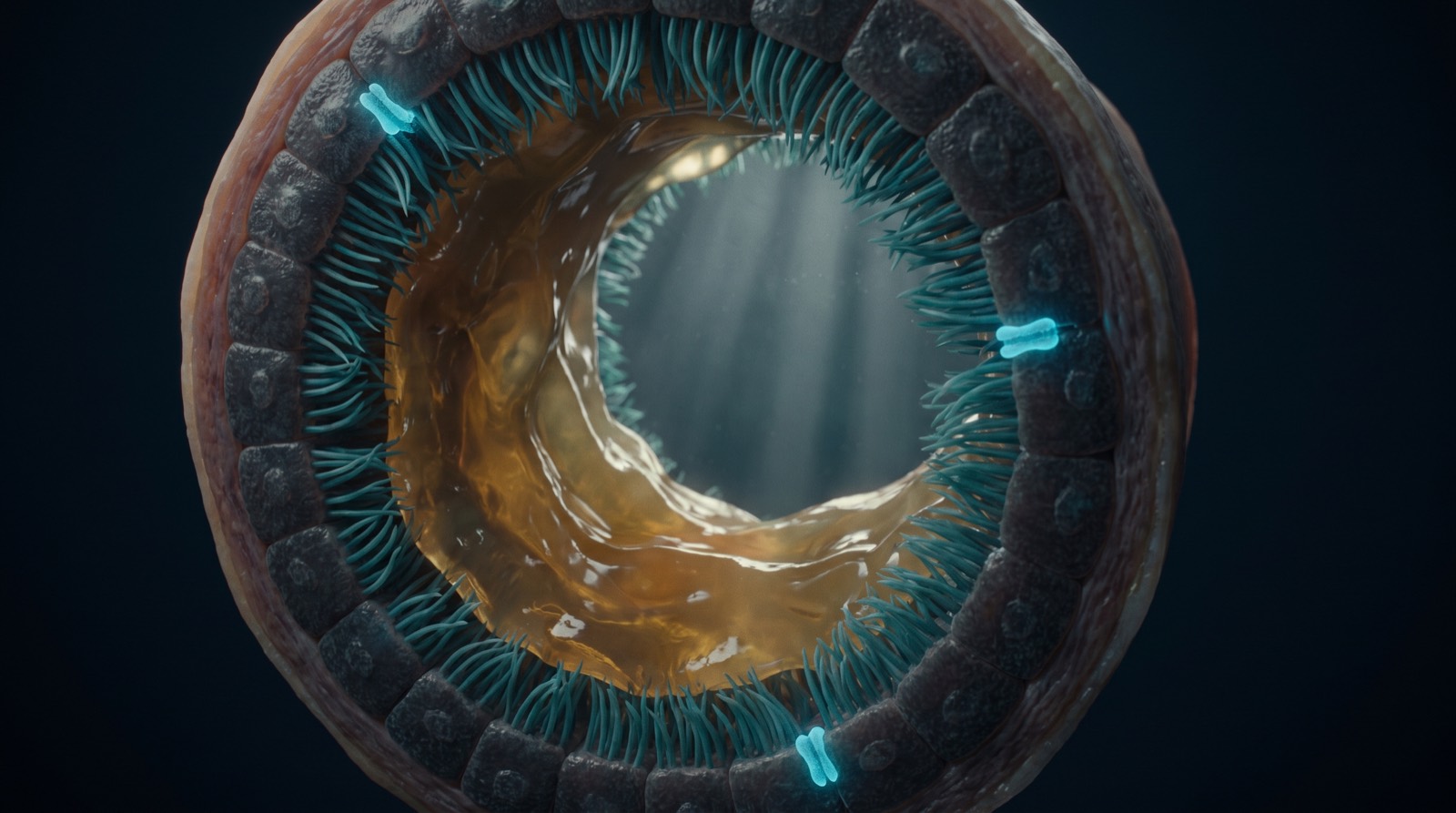
An airway lined with cilia, obstructed by thickened mucus. Illustration generated for The CRISPR Atlas — a visual aid, not a photograph or a literal depiction of molecular structure.

Sources

Connected in the Atlas

Every entry on this site is linked to the others it relates to. These connections are part of the record, not a search result.

Technologies

Prime Editing

Genes

CFTR
Chỉ mang tính chất thông tin giáo dục Trang này là tài liệu tham khảo, không phải tư vấn y tế. Tình trạng nghiên cứu và quy định thay đổi; hãy kiểm tra ngày cập nhật lần cuối ở trên và xác nhận mọi thông tin quan trọng với các nguồn chính được liệt kê.