La guía definitiva sobre edición genética.
Menú
Inicio Aprender Noticias Pregunta al Atlas
Explorar Tecnologías Enfermedades Tratamientos Ensayos clínicos Empresas Científicos Genes Investigación Instituciones
Más allá de la medicina Agricultura Ética Inversión Mapa mundial
Aprender y herramientas Empieza aquí Glosario A–Z Comparar tecnologías Cronología Listas y rankings Agentes de IA ★ Guardado API
Acerca de Quiénes somos Metodología Fuentes de datos Política editorial Contacto Avisos legales

🧭 Vista guiada
¿Eres nuevo en genética? Explicamos cada término mientras navegas, en un lenguaje sencillo. Las mismas páginas, con la ayuda incorporada.

⚡ Opinión experta
Ya conoces la biología. Solo el contenido — limpio y compacto, sin explicaciones adicionales. Esta es la vista predeterminada.

Idioma de la interfaz
Modo claro

Disease · Rare genetic disease

Cystic Fibrosis

A disease of thick mucus in the lungs and gut where highly effective drugs already exist for most patients — leaving editing to address the minority they do not help.

Preclinical lungdelivery problemCFTR
Preclinical research Tested in cells and animals only. Most preclinical programmes never reach people, and animal results often do not carry over.

Explicación sencilla

A faulty channel protein stops salt and water moving properly across cell surfaces, so mucus becomes thick and sticky, clogging the lungs and the pancreas. Cystic fibrosis is unusual on this site because the drug treatments that arrived in the last decade are genuinely transformative for most patients. The remaining problem is the minority whose particular mutations those drugs cannot help — and reaching the airway surface, which turns out to be very good at keeping things out.

Profundizar

Cystic fibrosis is caused by biallelic CFTR mutations impairing chloride transport. CFTR modulators, particularly elexacaftor/tezacaftor/ivacaftor, produce substantial clinical benefit for patients with responsive genotypes — the large majority — but do not help those with nonsense or rare mutations lacking sufficient protein to modulate. Editing must reach airway basal stem cells through mucus, cilia and epithelial barriers evolved specifically to exclude foreign material, and must correct enough of them for the effect to persist as the epithelium renews.

Why the bar is high here

When effective drugs exist, a permanent intervention has to justify itself against them. For most people with cystic fibrosis, modulator therapy is the answer and editing is not needed. For the minority of patients whose mutations produce no protein for a modulator to act on, there is currently no equivalent option — and that is the population editing programmes are aimed at.

The delivery problem is severe. Inhaled lipid nanoparticles are the most-pursued route; work remains preclinical.

Why the bar is high here
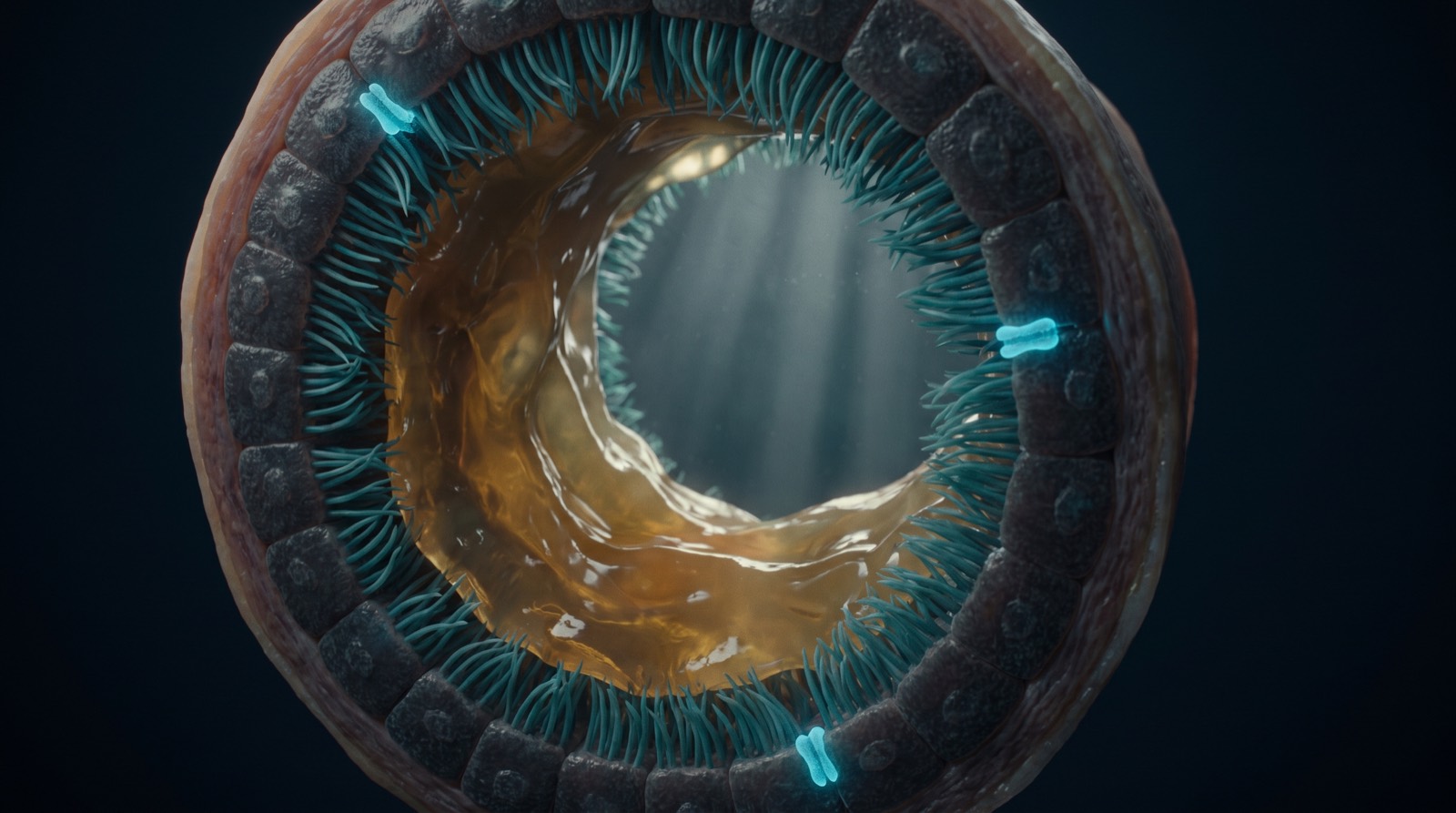
An airway lined with cilia, obstructed by thickened mucus. Illustration generated for The CRISPR Atlas — a visual aid, not a photograph or a literal depiction of molecular structure.

Sources

Connected in the Atlas

Every entry on this site is linked to the others it relates to. These connections are part of the record, not a search result.

Technologies

Prime Editing

Genes

CFTR
Solo información educativa Esta página es una referencia, no asesoramiento médico. El estado de la investigación y la situación regulatoria cambian; comprueba la fecha de última actualización que aparece arriba y confirma cualquier dato importante con las fuentes primarias indicadas.