Simple explanation
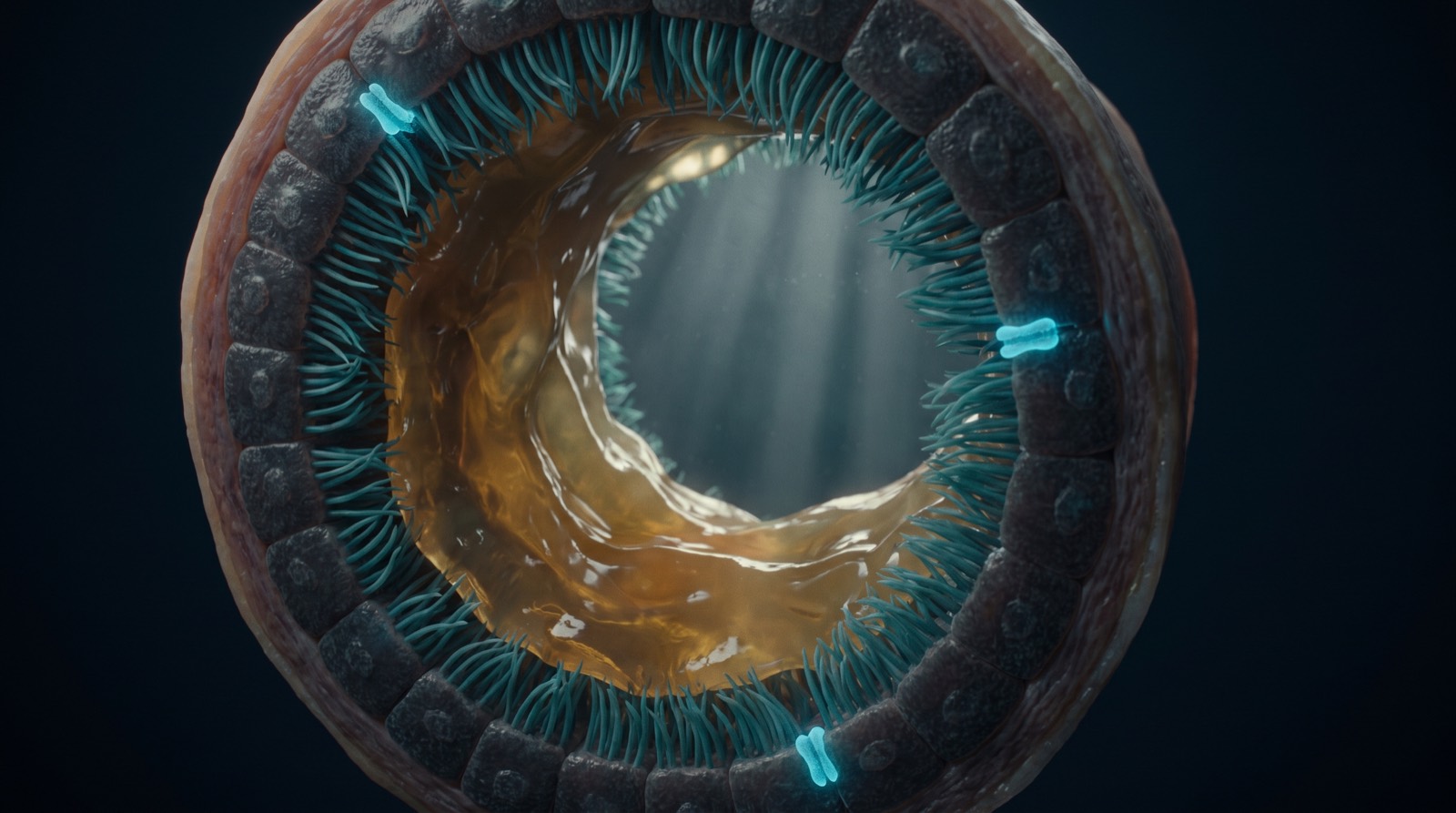
A faulty channel protein stops salt and water moving properly across cell surfaces, so mucus becomes thick and sticky, clogging the lungs and the pancreas. Cystic fibrosis is unusual on this site because the drug treatments that arrived in the last decade are genuinely transformative for most patients. The remaining problem is the minority whose particular mutations those drugs cannot help, and reaching the airway surface, which turns out to be very good at keeping things out.
Go deeper
Cystic fibrosis is caused by biallelic CFTR mutations impairing chloride transport. CFTR modulators, particularly elexacaftor/tezacaftor/ivacaftor, produce substantial clinical benefit for patients with responsive genotypes, the large majority, but do not help those with nonsense or rare mutations lacking sufficient protein to modulate. Editing must reach airway basal stem cells through mucus, cilia and epithelial barriers evolved specifically to exclude foreign material, and must correct enough of them for the effect to persist as the epithelium renews.
Why the bar is high here
When effective drugs exist, a permanent intervention has to justify itself against them. For most people with cystic fibrosis, modulator therapy is the answer and editing is not needed. For the minority of patients whose mutations produce no protein for a modulator to act on, there is currently no equivalent option, and that is the population editing programmes are aimed at.
The delivery problem is severe. Inhaled lipid nanoparticles are the most-pursued route; work remains preclinical.
Sources
- MedlinePlus Genetics, U.S. National Library of Medicine
Cystic fibrosis ↗