Исчерпывающий путеводитель по редактированию генов.
Меню
Главная Учиться Новости Спросить Atlas
Изучить Технологии Заболевания Методы лечения Клинические исследования Компании Учёные Гены Исследования Учреждения
За пределами медицины Сельское хозяйство Этика Инвестирование Карта мира
Обучение и инструменты Начните здесь Глоссарий А–Я Сравнить технологии Хронология Списки и рейтинги ИИ-агенты ★ Сохранено API
О нас О нас Методология Источники данных Редакционная политика Контакты Отказ от ответственности

🧭 Режим с подсказками
Впервые в генетике? Мы объясняем каждый термин прямо в процессе просмотра, простым языком. Те же страницы — со встроенной подсказкой.

⚡ Взгляд эксперта
Биология вам уже знакома. Только содержание — чисто и компактно, без лишних пояснений. Это вид по умолчанию.

Язык интерфейса
Светлый режим

Disease · Neurological disease

Alzheimer's Disease

The most common cause of dementia, where a well-known risk gene exists but editing remains firmly a laboratory activity.

Discovery braincomplex geneticsAPOE
Laboratory research Demonstrated in the laboratory. There is no treatment in or near the clinic for this use.

Простое объяснение

Alzheimer's disease damages memory and thinking as abnormal protein deposits build up in the brain and neurons are lost. A gene called APOE strongly influences risk — one version raises it substantially, another lowers it — but risk is not cause: many people with the high-risk version never develop the disease, and many people with the disease do not carry it. Editing a risk factor in a living adult brain is not something anyone can currently do, and it is not obvious it would help if they could.

Углубиться в тему

Late-onset Alzheimer's disease is polygenic with APOE ε4 the strongest common risk allele; rare autosomal dominant forms involve APP, PSEN1 and PSEN2. Editing is used to build isogenic models — for example converting APOE ε4 to ε3 or ε2 in patient-derived neurons — and to study protective variants such as the Christchurch APOE variant and the APP A673T allele. Therapeutic editing faces the same barriers as other brain indications, compounded by the difficulty of intervening before irreversible damage.

Risk is not cause

This distinction matters more here than almost anywhere else on the site. APOE ε4 shifts probability; it does not determine outcome. An intervention against a risk factor would need to be given long before symptoms, to people who might never have developed the disease, with permanent effect — a risk-benefit calculation quite unlike treating an established condition.

Risk is not cause
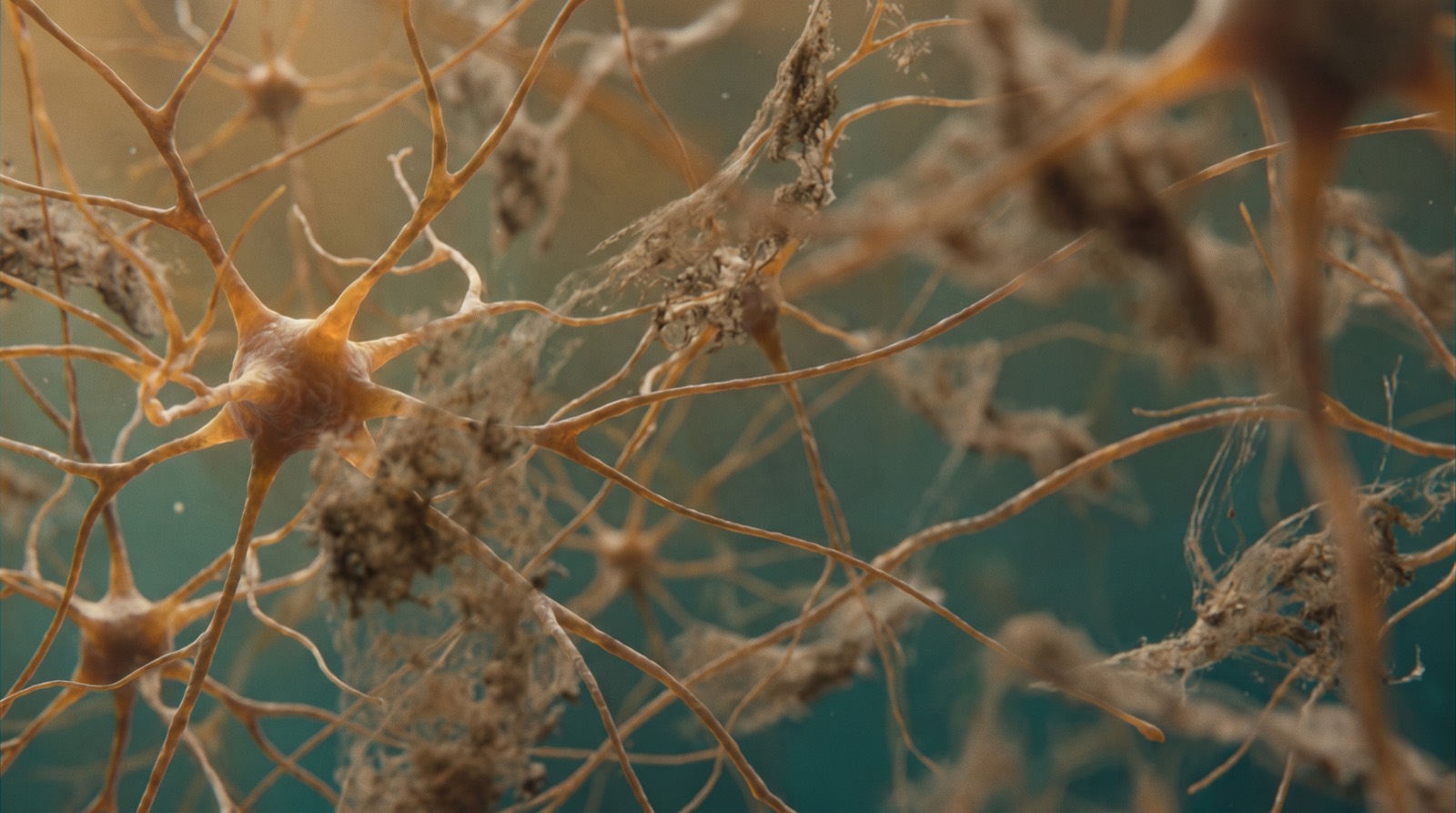
Neurons obscured by protein deposits. Illustration generated for The CRISPR Atlas — a visual aid, not a photograph or a literal depiction of molecular structure.

Sources

Connected in the Atlas

Every entry on this site is linked to the others it relates to. These connections are part of the record, not a search result.

Genes

APOE
Только в образовательных целях Эта страница — справочный материал, а не медицинская консультация. Статусы исследований и регуляторных процессов меняются; проверяйте дату последнего обновления выше и уточняйте всё важное по первичным источникам, указанным на странице.