Panduan definitif tentang penyuntingan gen.
Menu
Beranda Pelajari Berita Tanya Atlas
Jelajahi Teknologi Penyakit Perawatan Uji Klinis Perusahaan Ilmuwan Gen-gen Penelitian Institusi
Di luar dunia medis Pertanian Etika Investasi Peta dunia
Pelajari & Alat Mulai di sini Glosarium A–Z Bandingkan teknologi Linimasa Daftar & Peringkat Agen AI ★ Tersimpan API
Tentang Tentang kami Metodologi Sumber Data Kebijakan Editorial Kontak Penafian

🧭 Tampilan Terpandu
Baru mengenal genetika? Kami menjelaskan setiap istilah saat kamu menjelajah, dalam bahasa yang mudah dipahami. Halaman yang sama, dengan bantuan yang sudah tersedia.

⚡ Pandangan Ahli
Kamu sudah mengenal biologinya. Cukup kontennya — ringkas dan padat, tanpa penjelasan tambahan. Ini adalah tampilan default.

Bahasa antarmuka
Mode terang

Disease · Neurological disease

Alzheimer's Disease

The most common cause of dementia, where a well-known risk gene exists but editing remains firmly a laboratory activity.

Discovery braincomplex geneticsAPOE
Laboratory research Demonstrated in the laboratory. There is no treatment in or near the clinic for this use.

Penjelasan sederhana

Alzheimer's disease damages memory and thinking as abnormal protein deposits build up in the brain and neurons are lost. A gene called APOE strongly influences risk — one version raises it substantially, another lowers it — but risk is not cause: many people with the high-risk version never develop the disease, and many people with the disease do not carry it. Editing a risk factor in a living adult brain is not something anyone can currently do, and it is not obvious it would help if they could.

Pelajari lebih dalam

Late-onset Alzheimer's disease is polygenic with APOE ε4 the strongest common risk allele; rare autosomal dominant forms involve APP, PSEN1 and PSEN2. Editing is used to build isogenic models — for example converting APOE ε4 to ε3 or ε2 in patient-derived neurons — and to study protective variants such as the Christchurch APOE variant and the APP A673T allele. Therapeutic editing faces the same barriers as other brain indications, compounded by the difficulty of intervening before irreversible damage.

Risk is not cause

This distinction matters more here than almost anywhere else on the site. APOE ε4 shifts probability; it does not determine outcome. An intervention against a risk factor would need to be given long before symptoms, to people who might never have developed the disease, with permanent effect — a risk-benefit calculation quite unlike treating an established condition.

Risk is not cause
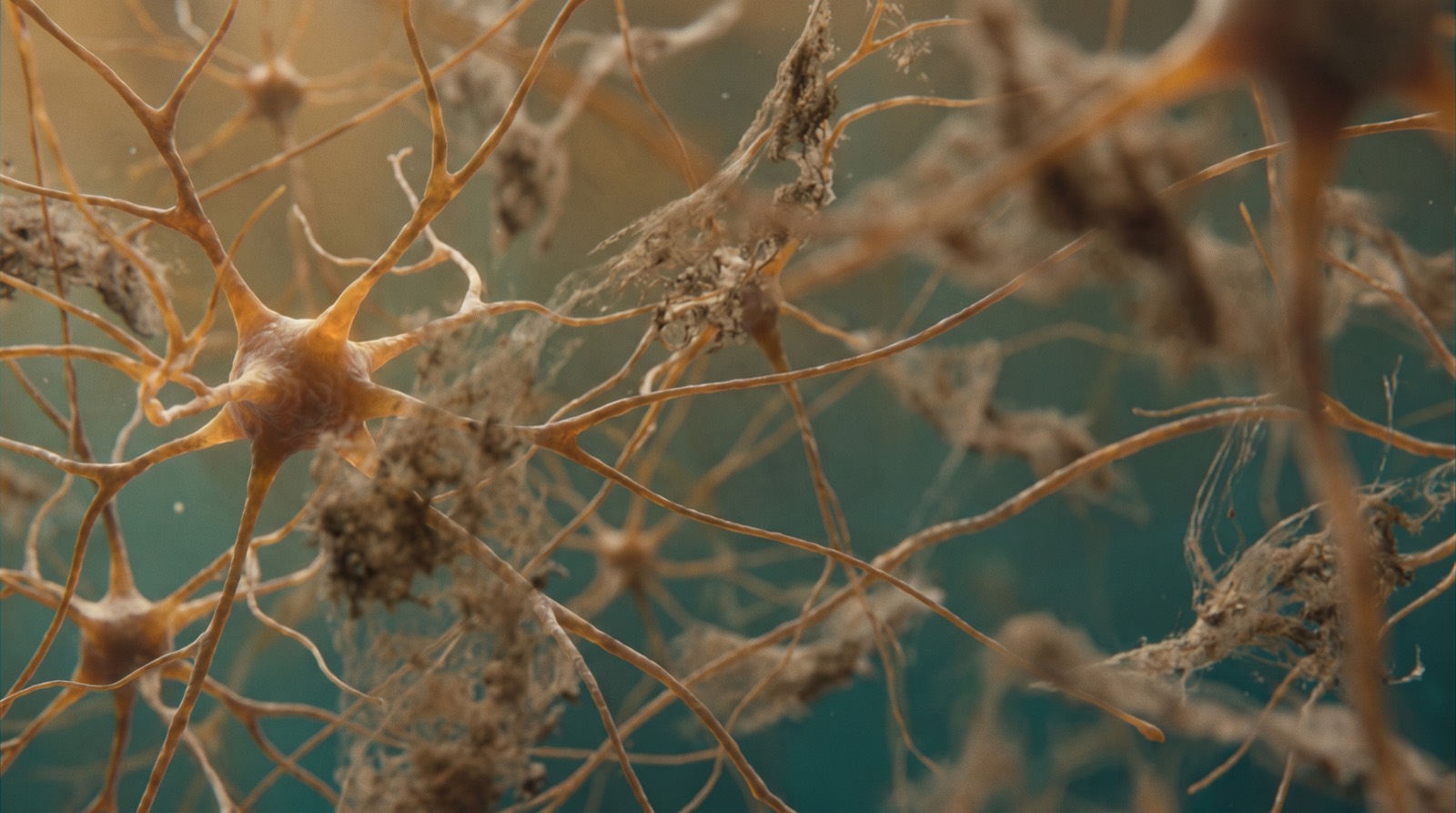
Neurons obscured by protein deposits. Illustration generated for The CRISPR Atlas — a visual aid, not a photograph or a literal depiction of molecular structure.

Sources

Connected in the Atlas

Every entry on this site is linked to the others it relates to. These connections are part of the record, not a search result.

Genes

APOE
Hanya informasi edukatif Halaman ini adalah referensi, bukan nasihat medis. Status riset dan regulasi dapat berubah; periksa tanggal pembaruan terakhir di atas dan konfirmasi hal-hal penting dengan sumber primer yang tercantum.