Sade açıklama
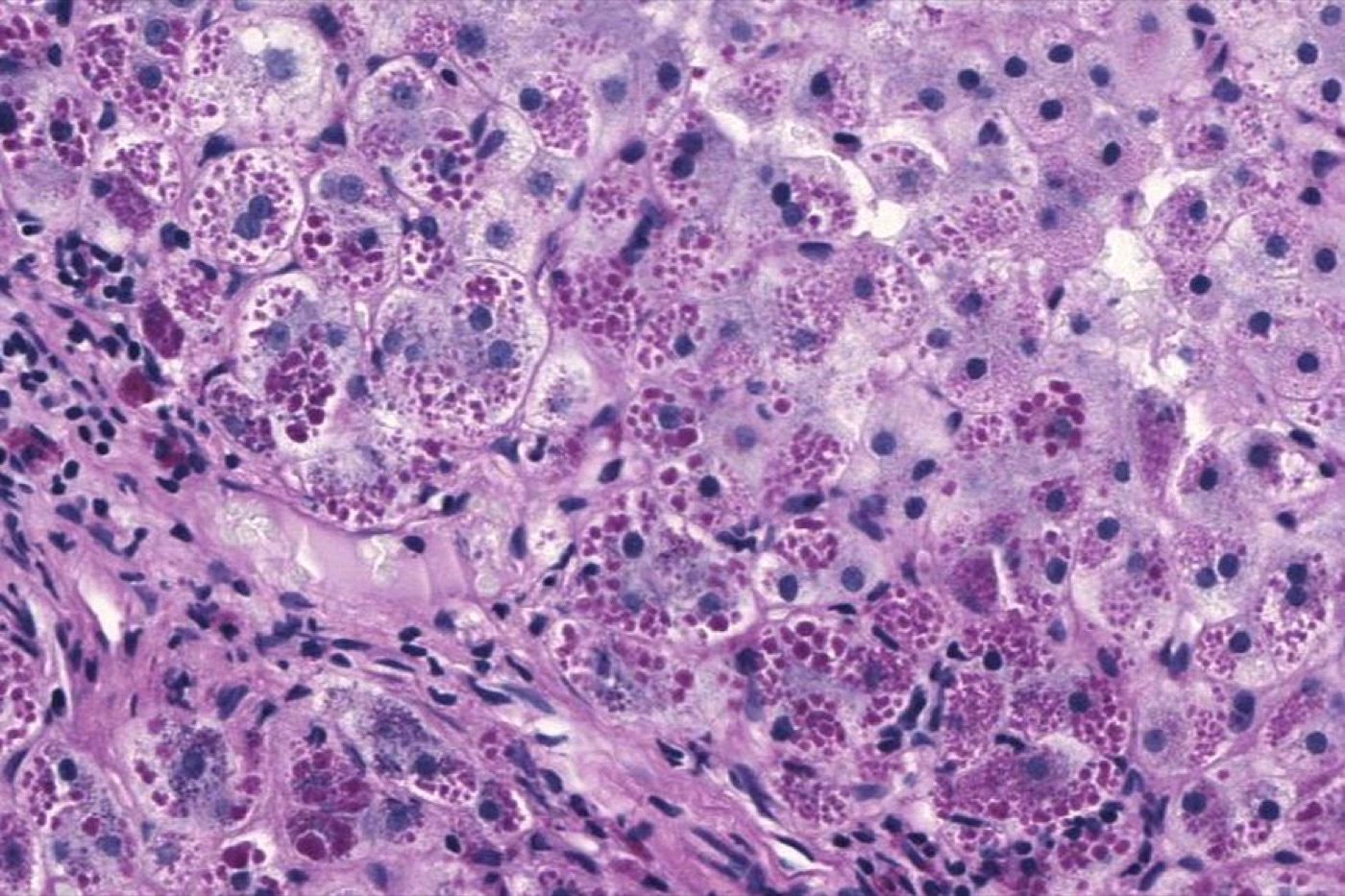
The liver makes a protein that protects lung tissue from being digested by the body's own enzymes. In alpha-1 antitrypsin deficiency, one letter of that gene is wrong, so the protein misfolds. Two things go wrong at once: the lungs lack protection and are damaged over decades, and the misfolded protein piles up inside liver cells and damages them. Because both problems come from the same wrong letter, correcting it should fix both, which is why this became the proving ground for correcting mutations in living people.
Daha derine in
AATD is most commonly caused by the SERPINA1 PiZ allele (E342K), producing a misfolded protein that polymerises within hepatocytes. Homozygotes suffer both loss-of-function lung disease, in the form of early emphysema accelerated by smoking, and gain-of-function liver disease from intracellular accumulation. Augmentation therapy addresses only the lung component. BEAM-302 uses in vivo base editing to correct the PiZ mutation directly, and reported the first clinical demonstration of correcting a disease-causing point mutation in vivo in humans; a single 60 mg dose raised alpha-1 antitrypsin above the level associated with lung protection in all patients dosed, and the programme entered pivotal development in 2026.
Why correction rather than knockout
Most in vivo editing programmes so far switch a gene off, because knockouts are easy and several diseases are caused by too much of something. AATD needs the opposite: the protein must be restored, and the toxic misfolded version removed. One precise letter change accomplishes both. It is the cleanest available demonstration that in vivo correction, not just disruption, works in people.
Sources
- Beam Therapeutics · 2026
Beam Therapeutics announces first patient dosed in global pivotal cohort of BEAM-302 trial in AATD ↗