Explicação simples
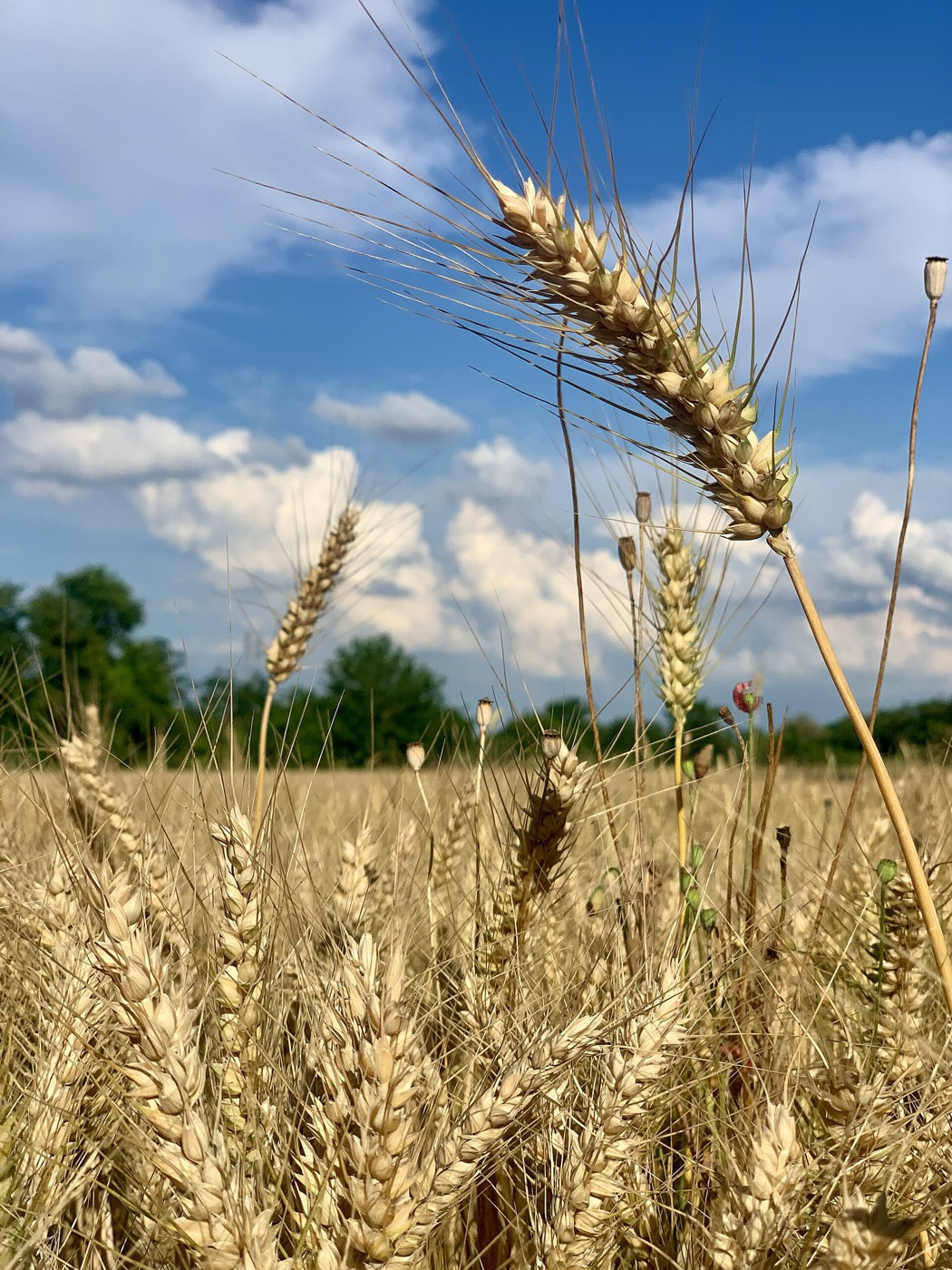
Bread wheat is hexaploid: it carries six copies of most genes, from three ancestral species. That makes conventional breeding extremely slow, because you must fix all six copies. Editing can hit all of them simultaneously. A landmark result knocked out all six copies of a susceptibility gene and produced wheat resistant to powdery mildew. Low-gluten and low-acrylamide wheats are also in development.
Aprofundar
Bread wheat's hexaploid genome requires simultaneous modification of homoeologous copies, which is impractical by conventional breeding but straightforward by multiplex editing. Knockout of all six MLO alleles conferred powdery mildew resistance. Further programmes target reduced gliadin content for coeliac-relevant wheat and reduced asparagine to lower acrylamide formation during baking. Field trials of low-acrylamide wheat have been conducted in the United Kingdom.
Sources
- Nature Biotechnology (Wang et al.) · 2014
Simultaneous editing of three homoeoalleles in hexaploid bread wheat confers heritable resistance to powdery mildew ↗